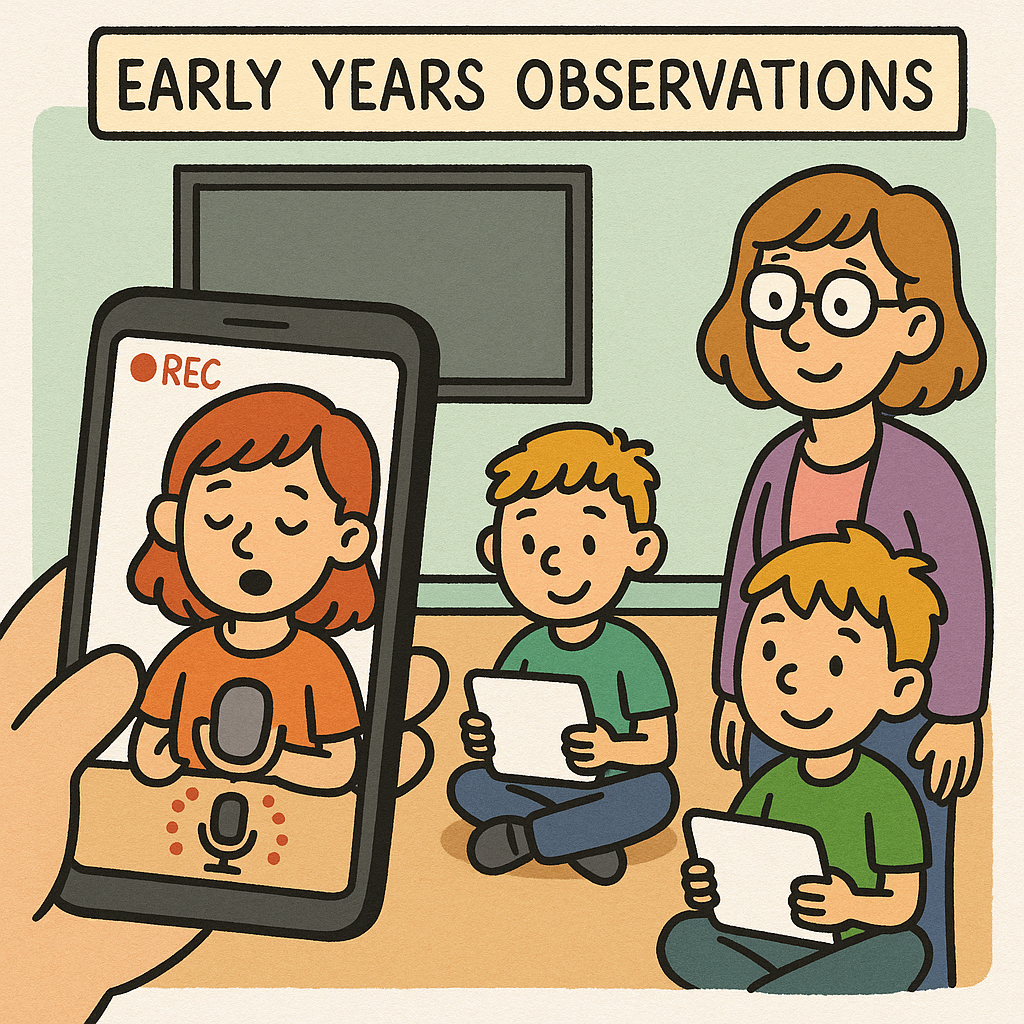
Observation is the key to understanding young children and finding out more about them as individuals. It is a fundamental aspect of the assessment and planning cycle, and provides a firm basis for reflection.
The process is crucial in helping parents or practitioners address the needs of early childhood development. Both parties have to work together to understand and meet a child’s individual needs by learning from each other and sharing with one another.
Observation is about watching children and noticing their actions, expressions, behaviours and interactions. You can use Watch and Learn to record, annotate, and securely share these observations with parents and colleagues.
The observations must take place on a regular basis – perhaps daily – in order to provide an insight to how they are developing, what they like doing and what they are learning through their play and life experiences. It’s important for parents and practitioners to share every detail so that it can be decided whether the child’s development is at the expected stage.
Observations of children in early years are vital, as each child has a unique set of abilities and talents. By observing what the child chooses to do and what resources they enjoy playing with provides reliable information about who they are as individuals. Tools like OracyChampions.com also allow children to voice their thoughts, helping teachers assess language and communication skills alongside play-based observations.
It can also provide an opportunity to determine the need of the child and therefore plan the next steps in their learning. To support this process, teachers can access online courses on Learn Anywhere covering observation methods, child development, and planning personalised learning in the EYFS.
To complement professional development, educators can now bring these insights to life with Learner Journey — an AI-powered platform designed to turn early years observations into rich, visual learning stories. Teachers can instantly transform notes, photos, and voice recordings into organised digital pages that document each child’s progress across the EYFS framework. These can be securely shared with parents and colleagues, helping everyone see how children learn and grow over time.
Some examples of what you may find out from observations are:
- What children enjoy and what their interests are
- Friendships they may have developed
- Identifying specific learning needs
- The child’s well-being
- Particular areas of development – physical, intellectual, social, emotional
- To get to know a child better
What are the best types of observation methods in early years of childhood?
Documentation of observations should be recorded regularly and should be as detailed as possible, noting what was seen and heard. Here are some different types of observation methods that will help the needs of early childhood development:
Anecdotal records
This method involves factual accounts of events that have taken place. Anecdotal records should be written in the past tense and cover the three W’s: What, When and Where? Other non-verbal cues such as body language, reactions and facial expressions should be included in an event.
Running records
This method involves noting down what you see and what the child says as it is happening. It should be written in present tense and include as much detail as possible.
Time samples
This involves recording observations about the child’s behaviour and what the child is doing at specific times. This can be done at regular intervals and can be helpful when identifying negative behaviour, as it allows understanding of the context surrounding a situation.
Jottings
This involves jotting down brief sentences detailing important events, behaviours and conversations.
Work samples
Work samples include the child’s paintings, drawings, writings, figures and other crafty creations. You should also take down some notes detailing what the child said or did surrounding these work samples.
Photographs
Images of the child, complete with annotations and descriptions about what was taking place when the image was taken, provide vital insight to who the child is as an individual.
Documenting learning is another way of creating a narrative about the child’s achievements. Providing evidence of a child’s learning recorded through observations and examples of children’s work, kept in a portfolio or folder, is well established in early years.
It is important that in using different observational techniques, parents and practitioners are clear about the purpose of what they are doing and that the observational processes are matched to this aim.
How to monitor children’s development using different methods
To monitor children’s development in early years, you can use various methods. Observe their play, behaviour, and growth regularly. Take note of their physical, cognitive, social, and emotional behaviors. Talk to parents and caregivers to get insights. Use developmental checklists and screening tools. Document their work and projects over time. Track language skills, social and emotional development, and academic progress. Assess physical growth with growth charts. For children with special needs, create individualised plans. Seek expert help if needed. Remember, each child is unique, and development varies, so be patient and attentive to their needs.