Every school should have a website. You know this. However, under absolutely no circumstances should you put a website online and just ‘forget’ about it. Legally, every school in the United Kingdom (and probably other countries) needs to be compliant with certain rules from the DfE and Ofsted. Schools should also have accessible websites. On top of all of this, a website just needs to be plain simple to use. If neither of these happen, a school website may not be legally compliant (causing problems with Ofsted), and may drive prospective parents away (reducing admission requests).
Here, we want to help you to not only discover what some of the most common website compliance mistakes are, but provide you with advice on how to fix them.
Common Website Compliance Mistakes
We’ll start by going through a list of some of the mistakes that most schools in the United Kingdom are making. We’ll then provide guidance on how these problems can be fixed.
Missing Statutory Information
Schools are legally required to include certain pieces of information on their website. This includes contact details, SEND policies, admissions information (and appeals process), the latest Ofsted report, safeguarding policies, the curriculum, and much more.
You probably won’t be surprised at how many schools fail to include this legally required information. Many don’t know they are not compliant until Ofsted inspect their websites. Part of the problem is the fact that the DfE and Ofsted are constantly changing requirements, and they are often not great at conveying the right information. Still, obligations rest on the school to ensure that everything is included.
Outdated or Incorrect Content
This is where most schools are failing. Many school websites have so much information that it is nigh on impossible to get it all updated in a timely manner, especially since there are many other school administrative tasks that need to be tackled.
Common issues include outdated policies, term dates, staff lists, etc. However, if things haven’t been checked for a while there is a good chance much of the site could be ‘out of date’.
Poor Website Structure and Navigation
School websites should be easy to navigate. The problem is that many of them are not. There are two reasons for this.
The main is that there isn’t really any sort of structure to the site. Links that you think would take you somewhere toward the information you need simply don’t. Other information may be hidden in the most unexpected of places. Probably because many older school websites have grown up organically, and staff aren’t really thinking about the website’s navigation when they add more and more pages to the site.
There may also be navigational issues where it is tough to find the information a person actually wants. There may also be dead links that will have you darting around a website trying to find some information.
Accessibility Issues
School websites should always strive to ensure that as many people as possible can browse their website. This means taking into account certain disabilities. For example, thinking about colour contrasts on the page, or ensuring that any images have ‘alternative’ text to them, which will ensure that those who suffer from sight issues can have the content read to them and know exactly what is going on.
Websites should also be accessible both on desktop computers and mobile devices, and the experience should be just as good on both. The problem is that many older school websites don’t even have that, despite mobile internet being around for a good while now.
Broken Links and Technical Errors
No broken links. Links should always be working, which ensures that browsers are not spending an age trying to hunt down the information that they need, or not finding the information at all and just leaving.
Technical errors (e.g. 404 errors, or anything thrown up by the content management system) not only impact the way that potential visitors see your site, but can also impact Google search rankings.
Non-Compliant Safeguarding Information
Schools legally need certain safeguarding policies on their site. These policies need to be written in the correct way. Many schools are not doing this, and this will be one of the first things brought up by Ofsted.
Lack of Clear Contact Information
It should be easy to contact the school. Address, names of certain staff members, phone number, and email. Simple.
Failure to Publish Financial and Ofsted Information
Some schools need to publish their financial records. All schools need to publish the latest Ofsted report.
How to Fix School Website Compliance Issues
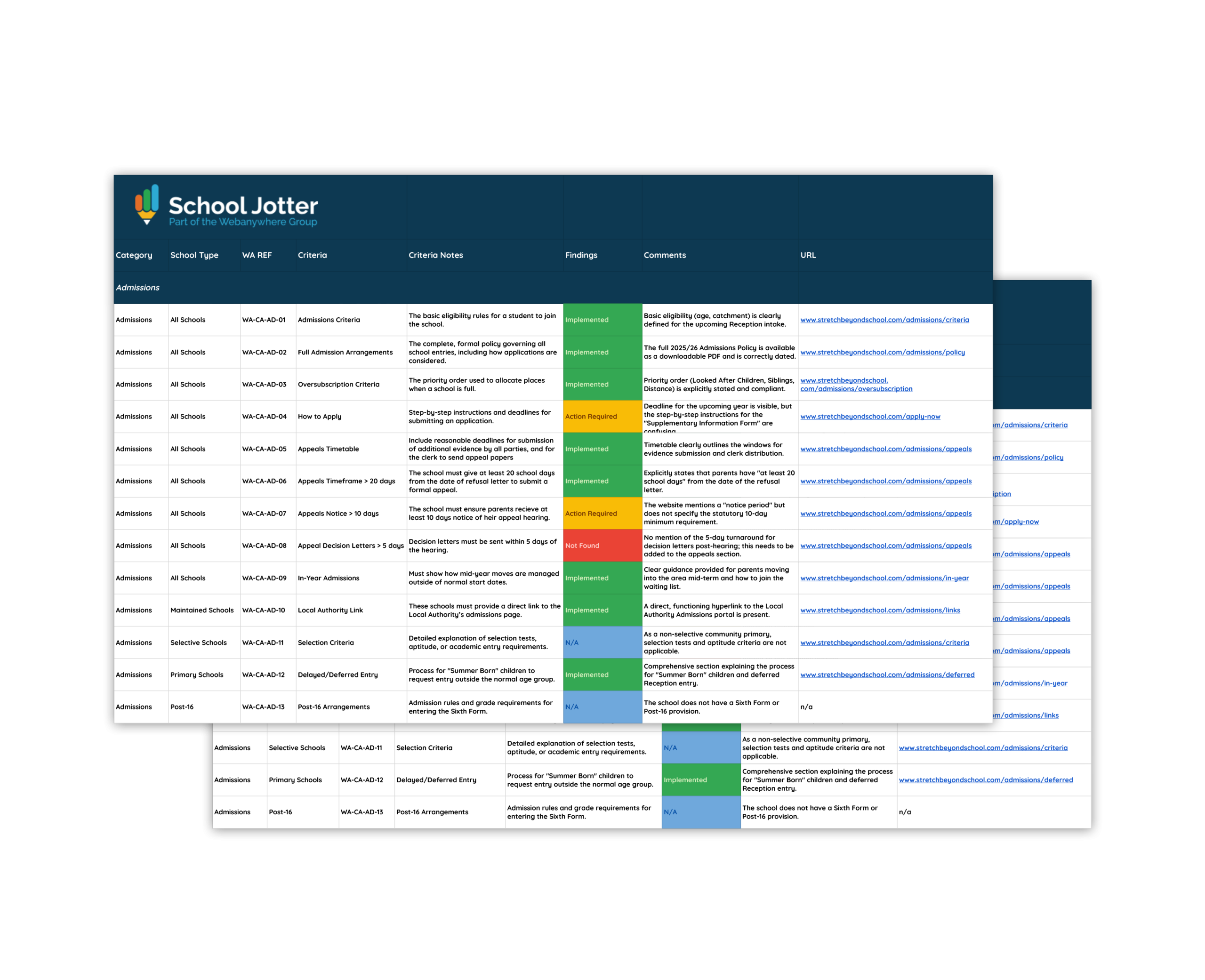
To fix issues, you’ll need to identify where the issues are. This can be quite tricky. We, therefore, recommend doing a school website audit. This will identify compliance issues, and provide advice on how to fix those issues (step-by-step), ensuring that your website can be compliant.
How to Stay Compliant Long-Term
A school website that is compliant now may not necessarily be compliant a year or two down the line. Therefore, it is highly recommended that your school website is audited at least once per year. Ideally, there should also be an audit shortly before an Ofsted inspection. Regular audits will ensure that a website always remains compliant, even in the face of ever-changing Ofsted and DfE requirements.
Final Checklist: Is Your School Website Compliant
We’ve given you a list of some of the most common compliance mistakes on school websites. We highly recommend that you go through this list and try and spot problems on your website. Chances are, you’ll spot quite a few of them. That’s OK. While your school website may not be quite compliant right now, there is nothing to say that you can’t get it up to scratch quickly.
We suggest doing a school website audit, and using a school website provider that specialises in education. They’ll tell you exactly what needs to be done to ensure your website works.