Understanding Modern Teaching Methods: From Play-Based Learning To STEM & Beyond

Published: December 5, 2025

modern teaching techniques

Teaching has changed quite substantially . This is due to the changing technologies, and what the future employment market may demand. Many schools, rather than having their students sit and just ‘listen’ to fact after fact being churned out are, instead, opting for more play-based and interactive learning methods.

Here, we want to look at the evolution of teaching methods in this area, and why they have changed.

Why Teaching Methods Have Evolved

Sure, school curriculums often don’t evolve as fast as they should, but they do evolve. Recent evolutions of school curriculums in the UK have focused heavily on more skills-based learning, helping students prepare for 21st-century careers.

As technology evolves, schools need to keep up. Students need to learn skills that will help them in the real world, including computing skills, teamwork, and more. Curriculums are working hard to include all of that, with a huge focus on practical skills, rather than forcing students to recite facts.
While curriculums still need to develop a little bit, students of today should be prepared for more modern 21st-century careers.

Play-Based Learning

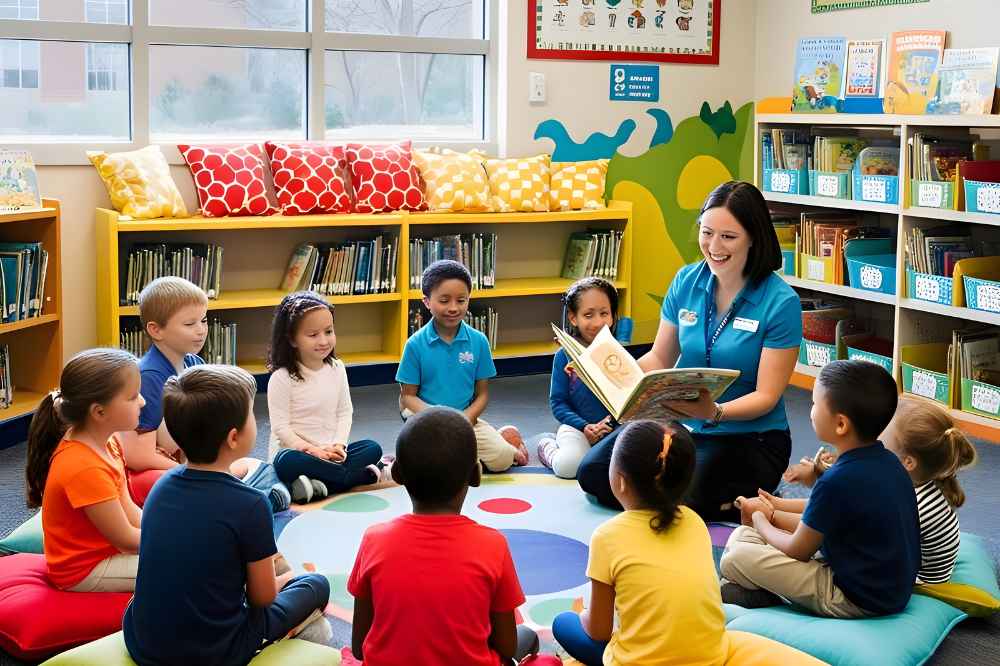
The early part of a child’s learning will be play-based learning, with almost all of this happening during primary school.

With play-based learning, children don’t know they are being ‘taught’. They are just having fun, while also picking up useful skills.

Play-based learning focuses on exploration, creativity, and social development. You probably did a lot of this back in primary school. For example, making clay sculptures, playing in the sand pit, etc.
The key aim of play-based learning is to increase skills that will set a child up for their schooling life, and beyond. This includes learning communication, problem-solving, and boosting confidence.

Inquiry-Based Learning

As a child gets older, a lot more of their education becomes focused on inquiry-based learning. Here, children learn by asking questions and investigating. This involves a lot of science experiments and research projects. This will likely continue throughout the child’s schooling career. As the student gets older, teachers will encourage more and more independent learning here.

Inquiry-based learning focuses on improving critical thinking and boosting curiosity, something which is essential for thriving in the modern job market.

Project-Based Learning (PBL)

This is very much an evolution on inquiry-based learning. The major difference is that PBL is often more long-term, and focuses on real-world projects. For example, coding a small app or website, etc. Some schools may even have their students set up a small business, or something similar to that.

PBL will often involve team work, and may even involve aspects from different subjects, promoting cross-curricular learning.

Since modern careers will often involve projects, the skills picked up here are essential. Students will learn about teamwork, planning, and there will also be a healthy amount of independent learning too.

STEM & STEAM Education

Science, technology, engineering and maths (STEM), or adding in ‘arts’ (STEAM) have become a key part of school curriculums.

STEM matters for all modern careers, since the future will be very technology-focused. STEM also enhances problem-solving skills and boosts logical thinking. While many students hate maths and see no point to it (they think they will have a calculator everywhere they go), maths is, without a doubt, one of the most important subjects at school for this reason.

STEM learning is now equipping students for the modern world. Many schools are now focusing on robotics, coding, and solving engineering problems. Many jobs in the future, particularly the well paying ones, will require some of these skills. So, it is best to prepare students early. Even if a student doesn’t take a career in STEM/STEAM, many of the skills learned during these lessons will help them in the future.

Blended & Digital Learning

Most schools will now combine classroom teaching with online tools. This may mean using educational apps, videos, and virtual labs. It, essentially, enhances the teaching while also providing a student with a degree of independent learning.

This type of education is essential nowadays. In the past, schools focused purely on one learning style, which often left students behind. With digital tools, schools can adapt to many different learning styles, ensuring their students learn in the right way.

Many digital learning experiences also offer personalised pacing for students, ensuring that a student doesn’t ‘move on’ until they can fully grasp a concept.

Differentiated Instruction

Once again, schools of the past were very much focused on one learning style, and they had a fixed pace to keep. This meant many students, some of whom could be quite gifted in the right circumstances, were left behind.

School curriculums are now starting to understand the importance of catering to the individual. This means teaching has become more inclusive, and can now cater to multiple learning styles and abilities. Lessons can be paced based on the individual, whether they are SEND, EAL, or a gifted learner.

The hope is that more inclusive school curriculums will ensure that students will be far better prepared for the real world. It won’t just be the students that work best with a very specific style of teaching.

Collaborative & Social Learning

More and more schools are now focusing on much more collaborative learning, because this enhances skills for modern employment. Expect a lot more group work, peer-to-peer learning and discussions in class.

This will happen from an early age, and students will learn communication, empathy, and teamwork.

How Schools Can Adopt Modern Methods

As much as schools know they need to adapt their teaching techniques, it can be a slow process. Thankfully, there are a few ways that things can be made easier:

  • Investment in professional development for teachers. Teacher training can go a long way toward encouraging modern teaching techniques.
  • The encouragement to use digital tools effectively. Teachers need to research the right tools for their students, and incorporate them into learning. Although, teachers must also take great care to ensure that digital learning is not the only teaching method.
  • Classrooms need to be flexible. This means more teaching styles, and the ability to adapt the way of teaching for unique student needs. Not everybody will move at the same pace.
  • Schools should keep parents in the loop about teaching methods, and perhaps collaborate with them to devise more modern learning plans, including the use of digital tools.

Modern Teaching Methods 101

Modern teaching methods are vital for improving engagement in the classroom, while also developing skills that can be used in the real-world.

As with all forms of teaching, there is no ‘one size fits all’ approach, and teachers will need to use multiple methods to ensure the best education for their students.

The future of teaching should be adaptable, creative, and technology-enhanced. If this can happen, then graduating students will always be in the best position to succeed in the modern employment market.

Need a site designed by an experienced company? Contact School Jotter. We specialise in school website development and marketing, ensuring that you never need to worry about the issues we highlighted.

How To Promote Equality And Diversity In The Classroom

Category: Uncategorized

Published: September 15, 2025

diversity in schools

Classrooms are now more diverse than ever. Despite this, many schools are not doing anywhere near enough to promote diversity and equality in the classroom. This is leading to increased bullying, and children being ill-equipped once they leave for the workplace. We want to change that.

We won’t be able to change everything about how diversity and equality are taught in the classroom. However, we can provide advice on how things can be made a little easier.

Why Promoting Diversity Matters in Education

Promoting diversity in schools leads every student to feel like they are valued and respected. They feel less like they are ‘different’, and just part of the group. Obviously, they know they may be different in terms of ethnicity, skin colour, gender, etc. but they won’t feel as if they are being excluded because of who they are as a person.

Promoting diversity will also increase empathy among students. Certain studies have shown that people’s issues with diversity often occurs much later in life, and by fostering an understanding of diversity early on, people are much more likely to continue in the correct way of thinking later on.

Teachers have often found that promoting diversity also helps to lower bullying, and even prepare people for the workplace where they will be working in diverse teams.

Encouraging Equality and Diversity in the Classrooms

While they are often intertwined, equality and diversity are different concepts.

Equality means offering fair treatment and opportunities for people. Access to the same resources and support. Basically, no child is left behind. Although, there is also the understanding some people may need a little extra help to get access to those opportunities.

Diversity looks at the differences between people, whether it is cultural, religious, skin colour, disabilities, etc. and celebrates them. Equality is about accepting differences between others, and being able to see things from the perspective of those who are different.

When diversity and equality are promoted in the classroom, the learning environment is better. People get access to the opportunities they need to thrive, while also knowing they won’t be held back by who they are as people. As we said, it will also encourage better communication and, hopefully, less bullying between class members.

Practical Ways to Promote Equality and Diversity

As we said, we can’t solve all diversity and equality issues in classrooms right here. However, we can give some key advice to teachers that can smooth the process out a little bit. Of course, you also need to be willing to promote the right environment in your classroom.

Create Inclusive Lesson Plans

Lesson plans should be much more inclusive. Look for teaching materials that represent multiple cultures, genders, and perspectives. Try to ensure everybody feels represented in that material. Modern teaching materials will be much easier to use here, with older materials very much a product of their time.

We are sure you’ll have no issues finding books that promote diversity, both in terms of stories and case studies.

Any content with stereotypes should be out. Older teaching materials are rife with it. Not harsh stereotypes, i.e. full-blown racist ones. Just ‘caricatures’ that make people feel excluded.

Encourage Open Discussions

We’ll be honest with you and say that children don’t always say the most ‘politically correct’ things. It happens, sadly. Mostly, it is because children lack a filter, and a real understanding of what they said is wrong. Some of the time, the comments are a product of the environment they grew up in. As a teacher, it is important that you facilitate open discussions about why what a child might have said was wrong.

Encourage discussions about differences between people. Answer questions people have, and try to quash some of the stereotypes that do arise.

During discussions, it is important that you teach children to value different opinions, no matter how opposed they are to them. Try to encourage people to see things from the perspective of another. We don’t all grow up in the same cultures, after all. Our beliefs are shaped by a lot of things.

Celebrate Cultural Awareness

Cultural awareness should be at the centrepiece of your teaching. For example, celebrate and discuss key cultural events throughout the year with children. This includes things like Diwali, Eid, Black History Month, and Ramadan. Base lessons around this and don’t be afraid to answer questions.

You likely have students from diverse backgrounds in your classroom, so encourage them to share any traditions or experiences, without judgement.

You may even want to develop displays in the classroom to celebrate the diversity of your class.

Challenge Bias and Stereotypes

You might not want to admit it, but we all carry unconscious bias. It is up to you to identify and correct those bias. We highly recommend that you regularly analyse the teaching materials and style you are using. You also might want to consider who you interact with most in the classroom, who is receiving the most praise, etc. It might be quite eye-opening e.g. you may be spending more time with the students who need less help to get them to the ‘next’ level. Many teachers do this. Some teachers keeps logs and journals to try to identify their biases over time.

It might also be worth talking with other teaching staff to discuss how they handle equality and diversity in their classrooms. Pooling resources works. Nobody can do everything alone.

Adapt Teaching for All Needs

As we said, equality is not about giving students equal access to the exact same resources. It is about ensuring that students get the help they need to be on a much more level playing field.

This will especially apparent in Special Educational Needs (SEN) where teaching styles may need to be adapted to a slower pace. There may also be a lot more encouragement on the strengths of the student rather than the weaknesses. There may also need to be far more personalised support.

English as an Additional Language (EAL) learners may also need teaching in different ways. For example, simpler language structures, more imagery that students can learn from. Encouraging group activities also works very well.

Basically, every child in that classroom needs to feel like they are valued and that you support their needs. Some people may need more help than others, but you never leave somebody by the wayside. You need to adapt your teaching methods.

Role of Teachers and Schools in Promoting Diversity

Children are often spending 8 hours per day at school, so it is a major part of their lives. This means teachers will play a key role in shaping a child’s views on diversity. Teachers need to be regularly trained to ensure they have the skills required.

Leadership will need to develop policies and commitments that teachers can follow, and parents/students can understand. These policies need to be adaptable as the needs of the school change, or as more learning about how best to offer equality happens.

We highly recommend schools regularly partner with local communities and schools to ensure they are offer proper diversity.

Measuring the Impact of Equality and Diversity in Schools

This will be an on-going process. It is essential to keep tabs on student engagement on wellbeing, especially those in marginalised groups. Although, of course, you don’t want the non-marginalised to fall through the cracks either. Everybody needs to feel respected.

Each year curriculums should be regularly reviewed for inclusivity. Any appropriate changes should be made.

Of course, you should also encourage student feedback. This way, you know exactly where changes need to be made.

Promoting Diversity in Education 101

Inclusivity in education is important, because it ensures everybody has the tools they need to thrive. It also ensures the classroom environment is fairer for everybody.

Promoting diversity leads to better education, less bullying and, later on, a smoother transition into the workplace.

Teachers can start promoting equality and diversity in the classroom today by fostering more open discussions, allowing those of different backgrounds to share who they are and, of course, a review of the curriculum to ensure it is more diverse.

Get in touch with our team today to learn more about our school website design and school marketing services.

10 Must-Have Features for School Websites in 2025

Published: March 25, 2025

school website design trends

A well-designed website is crucial for schools. It’s the central hub of all information that parents, students, and staff need to access and navigate.

A good school website increases communication and engagement with parents and the wider community. It has the most recent information, news, and tools regarding recent events and developments.

In this article, we will discuss the top 10 features that school websites should have in 2025 to guarantee that your school has an up-to-date, effective, and compelling online presence.

1: Mobile Responsiveness

It is important to have a website that is compatible with all devices including phones and tablets. Since more and more people use mobile internet, schools need websites that are easy to use and look good on small screens.

Mobile responsiveness enhances a user’s experience as it enables them to find their way around the site and locate the information they need regardless of the device they are using. It also improves accessibility to make sure everyone including parents and students who rely on their phones for instant information and updates can be able to use the website easily.

2: User-Friendly Navigation

Intuitive navigations are essential for helping website visitors find the information they need quickly and easily. A well-organised website ensures visitors aren’t frustrated searching for important details.

To achieve this:

  1. Organise content logically by grouping related information.
  2. Use clear, descriptive labels for menu items, and keep the menu structure simple.
  3. Ensure key sections like calendars, news updates, and contact information are easily accessible from the main menu.

This approach improves the user experience and makes it easy for parents, students, and staff to get the information they need.

3: Secure Portals for Students and Staff

Secure login areas are vital to protect private information and to give individuals access to the information in the school. Students and staff need a place to log in and access and control private information safely.

Secure portals may have areas for resources such as homework, grades, and internal communications. This makes it easier for students to assess their performance and get access to their work.

It also helps simplify communication and reduce the administration time needed by employees.

Secure portals are useful in protecting privacy and improving the operations of schools at the same time.

4: Comprehensive CMS

A good CMS is essential for a modern school website. They allow school staff to easily update and manage website content without technical knowledge. Teachers and staff can quickly post news updates and upload resources, keeping the school’s website site current and relevant.

Using a CMS designed specifically for schools has many advantages. These systems often include many useful features tailored to schools, such as integration with current systems, tools for managing class schedules and absence reports.

5: SEO Optimisation

SEO is can increase the number of visitors your school website gets. When your site appears higher in search engine results, it’s easier for people to find important information about your school.

To optimise your school websites content, use relevant keywords that parents and students might search for, such as “school calendar,” “homework help, or “school news. Write clear and informative meta descriptions for each page to give a snapshot of the content’s topic. It’s also important to regularly update your site with fresh content, like news articles and event updates. This to keeps your website relevant and engaging for both search engines and users.

6: Integrated Calendar System

A dynamic calendar informs your school community about important dates and events. It makes sure that everyone stays up-to-date with school activities, from holidays and teacher training days to sports events and school trips.

Integrating features like reminders and event notifications can make your school’s calendar even better. Parents can receive alerts about upcoming events and students can be reminded of homework deadlines and exam dates. This can improve both organisation and communication within the school community, meaning no one misses out on important information.

7: Social Media Integration

There are loads of benefits to linking your school’s social media accounts to the website. It allows people to stay updated and get real-time updates and is another platform to share news, events, and achievements with the local community. Integrating social media helps parents and students stay connected and engaged with school activities.

Social media integration also keeps content fresh. It’s a way to update your website by automatically displaying recent posts and updates from platforms like Facebook and Instagram. This not only increases community engagement but also showcases the daily life of your school to prospective families.

8: Multimedia Galleries

Photo and video galleries can visually showcase school events, achievements, and activities. They show a glimpse into daily school life, making it more appealing to current and prospective families.

Updating pictures and videos regularly is crucial to keep your school’s website current and engaging. Fresh content captures ongoing activities and can tempt visitors to return frequently to see the latest updates.

9: Multilingual Support

It’s important that non-English speaking parents and community members can view your school’s website so a translation feature is crucial. Having an international website means that everyone can access important information, making the website more inclusive.

This feature significantly improves communication by breaking down language barriers. Multilingual website support demonstrates your school’s commitment to diversity and inclusivity and creates a more welcoming and supportive community for all families.

10: SSL Certificates and Security

The security of your school’s website security is essential. Protecting data like student records, personal details, and internal communications is crucial to maintaining trust and confidentiality (plus it’s a legal requirement).

SSL certificates play a role in this protection. They encrypt data shared between the user’s browser and the website. This means that any information shared remains private and secure. Implementing a SSL certificate helps safeguard against data breaches and cyber threats, ensuring a secure online environment for your school websites users.

10 Must-Have Features for School Websites in 2025

A good school website needs to be mobile responsive, user-friendly, and equipped with secure portals for students and staff.

It should feature a complete CMS designed for schools, be optimised for SEO, and have an integrated calendar system.

Schools should review their current websites and consider incorporating these must-have features. Doing this will ensure their websites remain competitive, effective, and able to meet the needs of their community in 2025 and beyond.

Get in touch to discuss how School Jotter can help you build the perfect website for your school.


Best School Websites 2025

Published: March 19, 2025

Arete-Laptop-Mockup

In 2025, a great school website is more important than ever. A great school website should be easy to use, engaging and work on any device. Our bespoke school websites make it simple for parents, students, and staff to find important information while also reflecting the school’s unique character and community.

This article explores the best school websites of 2025, highlighting their key features and best practices that make them stand out.

Crossley Street

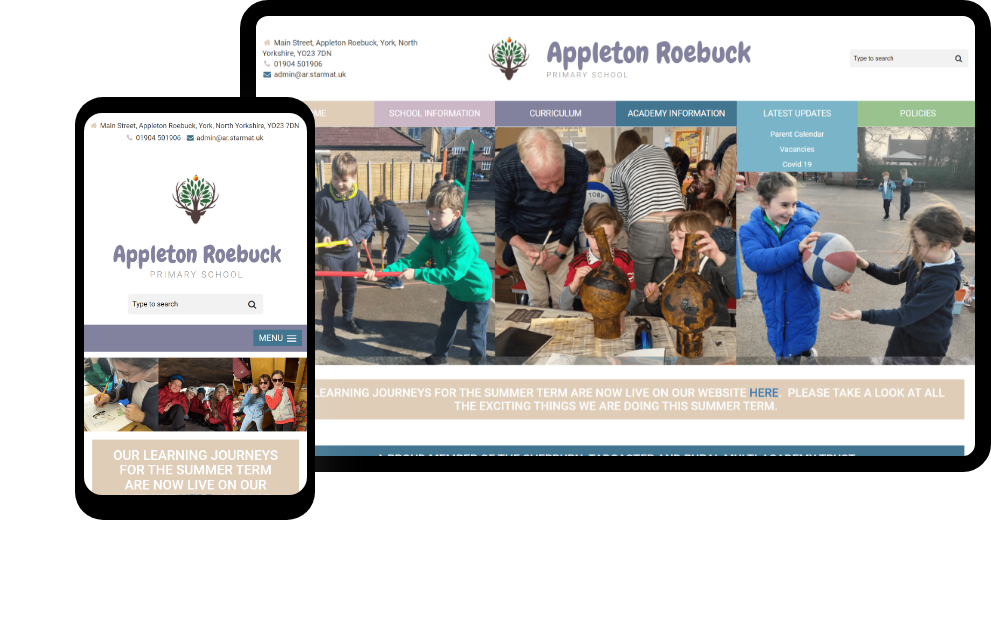
Crossley Street were looking for a high impact non scroll website that would provide an instant overview of school life to potential parents alongside clear and ofsted friendly information. We worked with the school to use their drone footage and added this onto the front of the website. We then used a clear navigation system to signpost to parents how to find information within 2 clicks. The website looks great on both mobile and desktop devices. 

https://www.crossleystreet.leeds.sch.uk/

Learning for Life Trust

Learning for life trust wanted the gold standard in school web design. The trust requested a website that appealed to both parents and pupils and reflected the nurturing settings of the school. Clear in layout, bright colours and a friendly design this website captures the essence perfectly of the school. With bright colourful headers it makes the website easy to navigate whilst being an enjoyable experience for parents,

https://www.learningforlifetrust.org.uk/

St Josephs, Oldham

When looking for a new website St Josephs had a strong vision of what they wanted. A clear, modern, simple website. Our graphic design sat down with the Head to bring their vision to life. We also created a curriculum page for the school allowing parents to learn about the subjects taught in schools. St Josephs also have a social media wall to the left of the site meaning parents can access their social media accounts in 1 click. 

https://www.st-josephs.oldham.sch.uk/

Dair House Private school

Dair House Private school approached us to modernise their website to attract more parents to look around the school. After speaking with the school we established what we needed to portray on the website. We focused on a clear layout but with richness of content including key dates for the diary, a video and newsletters. 

https://www.dairhouseschool.co.uk/

Rothely C of E School

Rothely C of E school wanted a website to showcase the school in spectacular fashion. We worked with them to create a fun, colourful and vibrant website. With an opening introduction song of ‘The continents’ fading purple writing as well as slideshows in the background of all pages this website lifts spirits and illustrates to parents the lively spirit of the school. 

https://www.rothley.leics.sch.uk/

Areté Learning Trust

Arete-Learning-Trust

Areté Learning Trust’s website mirrors its core values of excellence, purpose, and aspiration.

Inspired by the Greek concept of ἀρετή, the site is clear, modern-looking and easy to navigate. This ensures that parents, students, and staff can quickly find what they need.

With a strong visual identity and engaging content, it perfectly captures the trust’s commitment to helping every child be the best they can be.

https://www.arete.uk/

Oakfield Primary Academy

oakfield

Oakfield Primary Academy’s website was designed to reflect its welcoming and inclusive ethos as it provides a clear and engaging insight into school life.

The colour and design capture the school’s ethos and branding. The website offers easy access to curriculum details, events, and key resources, making it a valuable hub for both current and prospective families.

Hawksworth Church Of England Primary School

Hawksworth

https://www.hawksworthceprimary.org/

Build Your Schools Perfect Website

A great school website is more than just an online presence, it’s vital for communication and engagement. The best school websites of 2025 are easy to use, mobile-friendly, and have the right information for parents, students, and staff.

Since 2007, School Jotter has helped over 4,000 schools build fast, accessible, and Ofsted-compliant websites.

Get in touch to learn more about our bespoke school website design.

What Is Oracy? Explained

Category: Oracy,Uncategorized

Published: January 21, 2025

What is oracy

Oracy may not always get the same attention as literacy or numeracy, but its importance in shaping confident, articulate individuals cannot be overstated. From group discussions in primary classrooms to debates in secondary schools, oracy equips students with the speaking and listening skills they need to excel academically and socially.

In this article, we’ll unpack what oracy really means, why it matters, and how you can foster these essential skills across all age groups in your school.

What Is Oracy?

Simply put, Oracy is the development and practice of speaking and listening. However, the pedagogical concept of the term is much deeper. It involves effectively communicating, articulating thoughts, and participating in meaningful, balanced discussions while demonstrating relevant body language and linguistic and emotional cues. 

Oracy manifests in various ways throughout daily life. However, an oracy-focused school environment aims to foster students’ confidence in active listening, verbal expression, and constructing and conveying coherent arguments—all necessary for a fulfilled professional and personal life.

The Four Components of Oracy

Since Oracy encompasses many skills, they’re categorised into four components of the discipline (otherwise known as pillars).

Physical

Widely recognised as the foundation of communication, Oracy’s physical component includes non-verbal elements like voice clarity, eye contact, and body language. These skills allow students to engage with their audience (even if that audience is one person) and exude confidence.

Linguistic

When you think of Oracy, you likely thought of the linguistic component of it. It’s a common mistake, but in reality, linguistics (i.e., vocabulary, grammar, and storytelling) is just one of Oracy’s four pillars! It helps students articulate their thoughts and feelings both clearly and creatively. Storytelling projects are a particularly enjoyable way to develop linguistic skills (but more on that later).

Cognitive

This component involves formulating arguments, thinking critically, and organising thoughts. Developing these skills enables students to respond thoughtfully to others and structure their ideas logically.

Social and Emotional

Last but certainly not least, Oracy’s social and emotional pillar revolves around understanding emotions — of those around us and ourselves. Students with these skills will be able to self-regulate, empathise with others, and manage their feelings as they communicate with those around them.

Why Is Oracy Important?

Research has uncovered many benefits of oracy-focused curriculums.

Evidence shows that developing oracy skills improves academic performance across English, maths and science. 

But it isn’t just about academic achievement. Oracy’s advantages extend to improved employability and career readiness, self-confidence, resilience, empathy, self-awareness, well-being, happiness, life chances, and civic engagement and empowerment.

Oracy in the Classroom

The implicit teaching of oracy happens all the time in the classroom. But when you’re looking to take an oracy-focused approach, the following tables guides you through the age-dependent specific skills you should work on with your students and strategies to ensure your classroom effectively involves all four pillars of oracy:

Age-Dependent Oracy Skills

Key Stage Oracy Skills Taught and Learned
Key Stage 1 (Ages 5-7) – Listening and responding appropriately to peers and teachers
– Asking relevant questions to develop understanding and knowledge
– Articulating and justifying simple answers and opinions
– Providing structured explanations and descriptions
Key Stage 2 (Ages 7-11) – Listening and responding thoughtfully to others
– Asking meaningful questions to deepen understanding
– Articulating and justifying opinions and arguments with evidence
– Engaging in discussions and presentations
– Adapting language for different purposes and audiences
Key Stages 3 & 4 (Ages 11-16) – Participating in presentations, debates, and discussions
– Speaking confidently in various contexts
– Developing advanced oracy skills through English and other subjects
– Analyzing and evaluating spoken and written texts
– Communicating effectively in structured arguments and creative formats

Teaching Strategies for Oracy’s Four Pillars

Pillar Teaching Strategies
Physical – Encourage public speaking exercises focusing on clear pronunciation
– Use role-play to teach body language and eye contact
– Record and review pupil speeches to identify areas for improvement
Linguistic – Expand vocabulary through direct teaching and practical use
– Promote collaborative editing of peer work
– Conduct storytelling sessions and creative writing presentations
Cognitive – Facilitate classroom debates to encourage logical arguments
– Organize problem-solving activities that require verbal reasoning
– Introduce critical thinking challenges linked to real-life scenarios
Social & Emotional – Create a supportive environment where pupils feel comfortable expressing themselves
– Implement ’emotional check-ins’ for pupils to share feelings
– Foster empathy through group discussions and collaborative projects

Oracy vs Literacy and Numeracy

Literacy and numeracy have traditionally taken precedence over other curriculum subjects. But as of 2024, educators, researchers, and scientists alike say oracy should take over—or become as essential as literacy and numeracy, at least. Why? due to its importance, as discussed earlier. It forms the basis of our professional and personal lives, so why shouldn’t it be as important as other widely recognised essential disciplines?

Measuring and Assessing Oracy

While assessing oracy is still largely subjective, the Oracy Skills Framework and Glossary defines a list of attributes to look out for when assessing students’ skills. These include linguistic notions like using appropriate vocabulary in the context, physical attributes like pronunciation clarity, and cognitive choices like maintaining focus on the topic.

Improve Your Students Communication Skills With Oracy

Embedding oracy into your teaching and focusing on its four pillars, you can help your students build the confidence, communication skills, and emotional intelligence they need to succeed academically and socially.

Whether through classroom discussions, debates, or storytelling, prioritising oracy will prepare your pupils for the wider world beyond the school gates.

Explore Oracy Champions today!

6 Benefits Of Gamification In Education

Category: Uncategorized

Published: December 19, 2024

gamification in schools

Do you think “gamification” is little more than a buzzword? Think again. For a very good reason, the phrase has been popping up all over educational billboards over the past couple of years—it’s a formidable learning tool for today’s digitally focused generation.

As children spend an increasing amount of time on their phones, tablets, and game consoles, parents and educators alike are worried about the rising negative impacts. But adding gamification to the learning environment is the perfect way to turn these worries into relief.

Believe it or not, fractions (and other “boring” topics) can be taught even more effectively by gamifying the classroom. And in the following sections, we’re going over the six primary benefits that await you and your students on the other side of gamification.

1. Boosts Student Engagement

The most obvious benefit of gamification in a classroom setting is raised student engagement. Adding game-esque elements like scoreboards, badges, and awards to your lessons boosts their appeal in your learners’ eyes. It beats a standard-issue textbook any day of the week.

While every child is different and learns in distinct ways, a growing pile of evidence proves that gamification motivates and engages the masses for overall academic (and personal) performance.

In Analysis of Gamification in Education, a research paper by Andrew Stott and Carman Neustaedter, it acclaims games’ levelled formats for their ability to help learners digest new information steadily: “The concept of acutely designed progression in games has direct links to the concept of scaffolded learning in pedagogy. Both structure learning in planned increments to increase engagement and subdue feelings of disorientation and helplessness.”

2. Increases Motivation and Encourages Healthy Competition

Motivation is a powerful, complex process involving the brain’s reward system. Likeable experiences, such as winning a game, releases dopamine, the neurotransmitter associated with pleasure and reward. This release reinforces the behaviour that led to it, meaning we’re more likely to repeat it to reap the same rewards.

Gamification taps into this little neuroscience trick incredibly well, thanks to the immediate feedback and rewards provided after every challenge/task. Whenever your learners earn points or badges for reaching milestones or completing missions, their brains release dopamine, reinforcing the behaviour and motivating them to keep going.

However, dopamine isn’t the only way gamification raises motivation; it also adds friendly competition to the mix through classroom leaderboards. Learners can instantly see how they rank with their peers—a powerful motivator, particularly for children who are motivated by extrinsic factors (e.g., winning a competition, garnering approval, etc.).

Let’s look at an example to illustrate this competitive factor better. 

A gamified literacy program awards points for correctly comprehending paragraphs and bonus points for the speed at which they were comprehended. The more points your students get, the higher up the leaderboard they’ll appear. This motivates them to work harder and improve their skills to rank better among their peers. As such, the gamified environment fosters a sense of friendly competition, encouraging students to always do their best.

3. Enhances Knowledge Retention

Engagement and motivation are benefits to gamifying your learning environment in their own right, but they also (somewhat inadvertently) bring about another intrinsic advantage — improving information retention.

When students are more motivated and engaged, they will naturally retain more knowledge. Points and leaderboards spur the innate human desire to “win” and be recognised for achievements. This incentive unknowingly helps students process the curriculum deeply, leading to better overall retention.

4. Supports Collaboration and Teamwork

Competition and collaboration may seem like they exist in two wildly separate Venn diagrams, but in the case of gamified education, this couldn’t be further from the truth. While there are certainly solo goals to meet and missions to win, many game-based learning platforms offer a plethora of chances for collaborative learning. 

On the majority of educational game-based platforms, students will work together to achieve common objectives, fostering a sense of camaraderie. Ultimately, this collaborative spirit improves communication skills and teaches children the power of collective effort.

5. Offers Personalised Learning Opportunities

As we’ve briefly alluded to, not every child learns the same way — and effective gamification understands this.

Well-gamified environments give learners genuine choices and adapt to their individual needs, providing a range of learning pathways that achieve the same (or similar) goals. Offering such a personalised experience helps educators implement the Universal Design for learning framework (a.k.a., UDL framework), ensuring students’ unique strengths are catered to and their distinct weaknesses are improved in the most efficient way.

6. Provides Data-Driven Insights for Educators

In a traditional school system, teachers only truly reflect on students’ learning and their progress when marking papers or exercise books. But gamification gives real-time, measurable, meaningful data for educators to take on board and implement every day. Access to such accurate data will only enhance learning for your students, preparing them for the rest of their life more steadfastly than before.

6 Benefits of Gamification

Adding game-esque elements to your classroom improves collaboration, engagement, motivation, and friendly competition while providing highly personalised learning experiences for your students and giving you accurate, real-time data that will undoubtedly improve the efficacy of your teaching efforts.

Looking to attract more pupils to your school? Get in touch to discuss our marketing for schools & school website design.

6 Primary School Website Design Tips

Category: Uncategorized

Published: November 12, 2024

primary school website design

A well-designed website is more than just an online presence for a primary school. It is a vital communication tool between the school, parents, and students. When a website is user-friendly, it makes staying informed easy for everyone involved.

The website also helps build engagement and a sense of community. It allows parents to connect with what’s happening at the school and helps students feel more involved. The whole school community can unite by sharing news and events online.

This article will explore six essential tips for designing an effective primary school website.

1. Prioritise User-Friendly Navigation

Keeping the website navigation simple is crucial. A straightforward menu helps visitors find what they need without frustration. When parents and students can easily access information, their experience is much better.

It’s also important to use clear labels for menu items. Choose words that everyone understands to avoid confusion. This way, visitors know exactly where to click to find what they want.

Adding a search bar is another helpful feature. It allows users to quickly find specific information without browsing through many pages, saving time and making the website more efficient.

2. Implement Responsive Design

Your website must work well on all devices. Whether someone uses a desktop, tablet, or smartphone, the site should be easy to use and look good. This way, parents and students can access information no matter what device they use.

Starting with a mobile-first approach is a smart move. Many people use their phones to browse the web, so designing for mobile users first makes sense. You can then adjust the design for larger screens like tablets and computers.

Optimising images and media is also key. Large files can make your website load slowly, especially on mobile devices. Reducing the file sizes without losing quality helps your site load faster and provides a better experience for everyone.

3. Highlight Important Information

It is essential to ensure that contact details like phone numbers and the school’s location are easy to find. Having this information handy saves time and reduces frustration when parents or visitors need to reach out.

Keep the school’s calendars updated with current hours, events, and important dates. Parents appreciate knowing about upcoming activities, and students can stay informed about what’s happening at school.

Feature the latest news and announcements prominently on the homepage. You keep the school community engaged and aware of what’s going on by showcasing recent updates.

4. Incorporate Engaging Visuals

Using high-quality images can make your school’s website more appealing and inviting. Professional photos of the school environment, staff, and students help visitors get a real sense of your school. These images showcase the friendly faces and vibrant spaces that make your school unique.

Adding multimedia content like videos and slideshows brings the website to life. For example, include a virtual tour of the school, clips from recent events, or slideshows of student artwork. This kind of content engages visitors and connects them to the school’s activities.

Consistency in branding ties everything together. Applying the school’s colours and logos throughout the site creates a cohesive look that strengthens your school’s identity. Consistent branding helps visitors recognise your school instantly and builds trust through a professional appearance.

5. Ensure Accessibility Compliance

It is vital to make your website accessible to everyone. Inclusive design means people with disabilities can use your site easily, which shows that your school cares about every community member.

Providing alt text for images is important. Adding descriptive text to each image ensures users with vision impairments can understand what the pictures show and don’t miss any content.

Using readable fonts and good colour contrast makes your site easier to read. Choose clear fonts. Make sure there’s a strong difference between text and background colours.

6. Optimise for Search Engines

Optimising your website for search engines is important because it helps more people find your school online. When your site ranks higher in search results, it’s easier for parents and the community to discover what your school offers.

Relevant keywords are a key part of SEO. In your content and metadata, include words related to primary education and your school’s name. This helps search engines understand what your site is about and connects you with people searching for those terms.

Providing quality content is also crucial. When you offer valuable and original information, visitors are likelier to stay on your site and explore. This positive engagement signals to search engines that your site is useful, which can improve your rankings.

Remember technical SEO. Ensure your website follows best practices like a clear structure, fast loading times, and mobile-friendly. Use descriptive URLs and allow search engines to crawl your pages. These steps help search engines properly index your site so it appears in search results.

6 Primary School Website Tips

To make your school’s online presence shine, focus on creating a website that:

  • Is easy to navigate
  • Works well on all devices
  • Showcases important information
  • Includes engaging visuals
  • Is accessible to everyone
  • Is optimised for search engines

Combining these elements means building a site that informs and connects with your community. These strategies enhance the experience for parents, students, and staff, fostering better communication and engagement within your school.

Looking to improve your website? Get in touch with School Jotter today to learn about our primary school website design.

5 Tips to Improve Parental Engagement in Schools

Category: Uncategorized

Published: November 4, 2024

Parental Engagement in Schools

Parental involvement plays a crucial role in student success. When parents are engaged, students often perform better academically, show improved behaviour, and feel more supported in their learning journey. Schools also benefit from a collaborative environment between teachers and parents, which forms a positive and supportive school culture.

Active parent participation goes beyond individual families—it strengthens the entire school community. Engaged parents connect, contribute fresh ideas, and help bring school events to life.

This article will cover five practical tips for boosting parental engagement and creating lasting benefits for students, staff, and the whole school.

1: Improve Communication Channels

Reaching parents where they already are—through emails, SMS, school apps, and social media—makes communication more effective. Using multiple channels ensures parents receive important information most conveniently, increasing the likelihood they’ll stay connected and engaged with school updates.

Consistency is also key. Sending regular updates, like weekly newsletters, event reminders, and progress reports, helps parents feel informed and included. When parents know what’s happening at school, they’re more likely to get involved and support their child’s learning. Reliable, steady communication builds trust and makes it easier for parents to participate actively in the school community.

2: Organise Regular Parent-Teacher Meetings

Scheduling parent-teacher meetings at different times—or offering virtual options—can make it much easier for parents to attend. Flexibility shows consideration for parents’ busy schedules and can increase attendance, ensuring more families stay involved in their child’s education.

These meetings should be collaborative, focusing on supporting the student’s growth rather than only discussing grades. Schools can build a supportive partnership by involving parents in setting goals and creating strategies for their child’s development. This approach helps parents feel valued contributors to their child’s success and strengthens the connection between home and school.

3: Create a Welcoming School Environment

Hosting events like cultural nights, sports days, and community fairs can make the school feel inviting and open to families. These events allow parents to engage in a relaxed setting, meet other families, and feel more connected to the school. When parents enjoy being at school, they’re more likely to get involved.

Encouraging inclusivity through cultural awareness is also essential. Recognising and celebrating the diverse backgrounds of all families ensures that every parent feels welcome and valued. Creating a space where everyone feels accepted can create a stronger, more supportive community that benefits students, staff, and families alike.

4: Encourage Volunteering and Participation in School Activities

Providing various volunteer opportunities that fit different schedules can make it easier for parents to get involved. Whether it’s helping with event planning, assisting in the classroom, or joining school trips, flexible options allow parents to participate in ways that work best for them.

Recognising and appreciating parents is equally important. Simple gestures like a thank-you note, a mention in the school newsletter, or a small appreciation event can go a long way. Acknowledging their efforts reinforces their value in the school community and encourages ongoing participation, creating a supportive network that benefits students and staff alike.

5: Use Technology to Enhance Engagement

A dedicated school app can speed up and simplify communication with parents. With features like event reminders and important announcements, an app keeps parents informed in real-time, reducing the chances of missed information. Everything in one place streamlines the experience, making it simple for parents to stay connected.

Another critical tool is a regularly updated school website, which serves as a go-to resource for parents. It provides essential information about school policies, events, and news. When parents know where to find current information, they feel more engaged and included in the school community.

5 Tips to Improve Parental Engagement in Schools

Parental engagement is crucial for student success. When parents are involved, students often achieve higher grades, have better attendance, and show more positive attitudes toward school.

We encourage schools to adopt some or all of these strategies to build a more connected community. Even small steps can make a big difference.

Understanding WCAG: A Guide to Web Accessibility

Published: February 5, 2024

Web Accessibility

The digital world has become an integral part of our daily lives, and ensuring that everyone, including people with disabilities, can use and benefit from web content is crucial. The Web Content Accessibility Guidelines (WCAG) are a set of recommendations for making web content more accessible to people with disabilities. This blog post will delve into the WCAG guidelines, their importance, and how they can be implemented to create a more inclusive digital environment.

What is WCAG?

The WCAG is developed through the World Wide Web Consortium (W3C), which is an international community that develops open standards to ensure the long-term growth of the Web. The guidelines are part of the W3C’s Web Accessibility Initiative (WAI). They are designed to make web content more accessible to people with various disabilities, including visual, auditory, physical, speech, cognitive, language, learning, and neurological disabilities.

The Evolution of WCAG

The WCAG guidelines have evolved, with multiple versions being released to address the changing web landscape and emerging technologies. The most widely recognized versions are:

  1. WCAG 1.0: Released in 1999, this was the first version and included 14 guidelines.
  2. WCAG 2.0: Released in 2008, this version introduced four principles (Perceivable, Operable, Understandable, and Robust) and provided more detailed success criteria.
  3. WCAG 2.1: Released in 2018, this update added more guidelines, mainly focusing on mobile accessibility, people with low vision, and people with cognitive and learning disabilities.

The Four Principles of WCAG

The WCAG guidelines are built around four principles, often referred to by the acronym POUR. These principles are essential for anyone who wants to understand and implement web accessibility:

  1. Perceivable: Information and user interface components must be presented in ways that users can perceive. This means that users must be able to perceive the given information (it can’t be invisible to all of their senses).
  2. Operable: User interface components and navigation must be operable. This means that users must be able to operate the interface (the interface cannot require interaction that a user cannot perform).
  3. Understandable: Information and the operation of the user interface must be understandable. This means that users must be able to understand the information and the operation of the user interface (the content or operation cannot be beyond their understanding).
  4. Robust: Content must be strong enough to be interpreted reliably by various user agents, including assistive technologies. This means that users must be able to access the content as technologies advance (as technologies and user agents evolve, the content should remain accessible).

Implementing WCAG Guidelines

Implementing WCAG guidelines involves several steps:

  1. Understanding the Requirements: Familiarize yourself with the WCAG guidelines and the specific needs of various disabilities.
  2. Conducting an Accessibility Audit: Evaluate your current website or application against the WCAG criteria.
  3. Making Necessary Changes: Modify your website or application to meet the WCAG standards. This might involve changes to design, coding, or content.
  4. Regular Testing and Updates: Continuously test your website with various tools and methods and update it regularly to ensure ongoing compliance.

Understanding WCAG

The WCAG guidelines play a critical role in creating an inclusive digital environment. Web developers and content creators can ensure that their websites and applications are accessible to all users, regardless of their abilities or disabilities by adhering to these guidelines, w. In an increasingly digital world, web accessibility is not just a nice to have; it’s necessary to ensure equal access and opportunity for everyone.

How to Ensure an Inclusive Online Web Experience for All Parents

Category: Uncategorized

Published: December 16, 2023

Web Experience for All Parents

Don’t Forget The Details

One of the most important details any school web design fails to take into account is accessibility. This can also take place when you are developing a mobile-friendly school website design.

People are not the same as they have minor defects like colour blindness, hearing loss, and other disabilities that make it hard for them to access your school’s website.

While you may not be able to please or meet everyone’s needs you can still make your website accessible to a large majority of your target audience. When your school website design is inclusive for all parents you can avoid any legal issues that may have arisen if you did not do this work.

Designing School Websites for Diversity: Crafting an Inclusive School Web Experience

When you are going to make this attempt to have an inclusive school website design, you need someone with experience in web design to make the end result perfect.

Also, you need to know who is attending your school and what their parents are like, as well as know your target audience. Crafting an inclusive website means addressing all the needs found in your school’s parents, their children, and potential parents and students.

The reasons you want an all-inclusive website are:

– it broadens your audience

– it creates a better user experience for all who visit the website

– it helps build a cohesive and equal community

– avoids legal issues

Once you understand the reasons for building an all-inclusive school website design, you need to make sure it meets the following criteria- perceivable, operable, understandable, and robust.

An all-inclusive website design is a lot of work which is why you need someone with experience in web design to help you build it.

Ensuring Every Parent Feels Welcome via School Website

The steps to accomplish this goal would be similar to the ones you need to take when parents make a physical visit to your institution. The website is just an extension of the school and should incorporate key welcoming principles so all parents will feel comfortable exploring the website.

The first step to doing this is to understand that your school’s website design is your first impression. How it looks will tell every parent what you think of them. Making it an attractive landing page helps make the parents feel welcome.

The second step would be to clearly communicate and communicate well. If this task means having web pages translated into several languages, then so be it. You want every parent to feel welcome and meeting them in their native tongue is one way to accomplish that objective.

Don’t forget to ask parents what would make them feel comfortable when they visit the school’s website. This is vital information that cannot be overlooked.

Creating an Inclusive Online Hub for School Parents

One of the first steps in this process is to make sure to place a meaningful welcome on one or more pages. There can be a general welcome from the school and more specific welcoming messages from individual teachers to parents of their students.

Don’t forget to add check-ins as those help parents feel more comfortable. Then, design your web pages in such a way that parents can see them and their children represented in the culture of the school.

Be sensitive to ethnicity, cultures, and religions, and have that sensitivity appear in the language on signs, posters on the wall, and even key books in your school’s library. All of this can be displayed on different web pages on your school’s website.

Finally, create activities for the whole family to be involved. Of course, these have to be flexible and designed to meet modern parental schedules. You can get ideas through brainstorming as well as learning your students’ parents’ schedules.

Making user-friendly School Web Design

This is a vital element in any school website design as well as its mobile-friendly school website design. Being user-friendly encourages engagement and makes all parents feel welcome.

However, this is not an easy task as many parents do not have the same abilities and cannot access your school’s website in the same way. Here are some key disabilities that your web designer needs to consider and incorporate into his or her website design:

– visual

– auditory

– physical

– speech

– cognitive

neurodiversity

temporary and situational

Unfortunately, it may not be possible to meet all of these disabilities. Trying to please everyone is not an easy task and often you end up pleasing no one.

Strategies for an Inclusive School Web Experience

The following should provide you with the key ideas you can implement:

– semantic HTML elements

– have your site keyboard-friendly

– ensure good colour contrast and make it sufficient for all people

– provide media alternatives

– make use of captions and ALT texts

– include alternative text and content

– enable the keyboard navigation feature

– make sure to include clear instructions and labels

– allow your parents to make customized changes

– watch out for content that triggers seizures

– be culturally sensitive

– then test your website using real people

There are accessibility tools that can help you analyze how inclusive your school website design is. Don’t forget to use assistive technology to gauge the upgrade to your website.

Also, do not be afraid to make any changes that these testers and tools suggest.

Some Additional Words

When you are ready to make your school website design all-inclusive, contact our company. We pride ourselves on helping schools be more inclusive and broaden their audience through their website design.

We have the technicians and the experts who will help you construct a great inclusive website that should be welcoming to all parents. Contact us today to get started on this upgrade and broaden your school’s audience.

It is well worth the time and effort to accomplish this goal.