In 2026, a great school website is more important than ever. A great school website should be easy to use, engaging and work on any device. Our bespoke school websites make it simple for parents, students, and staff to find important information while also reflecting the school’s unique character and community.

This article explores the best school websites of 2026, highlighting their key features and best practices that make them stand out.

Upwood PrimaryUpwood Primary Laptop
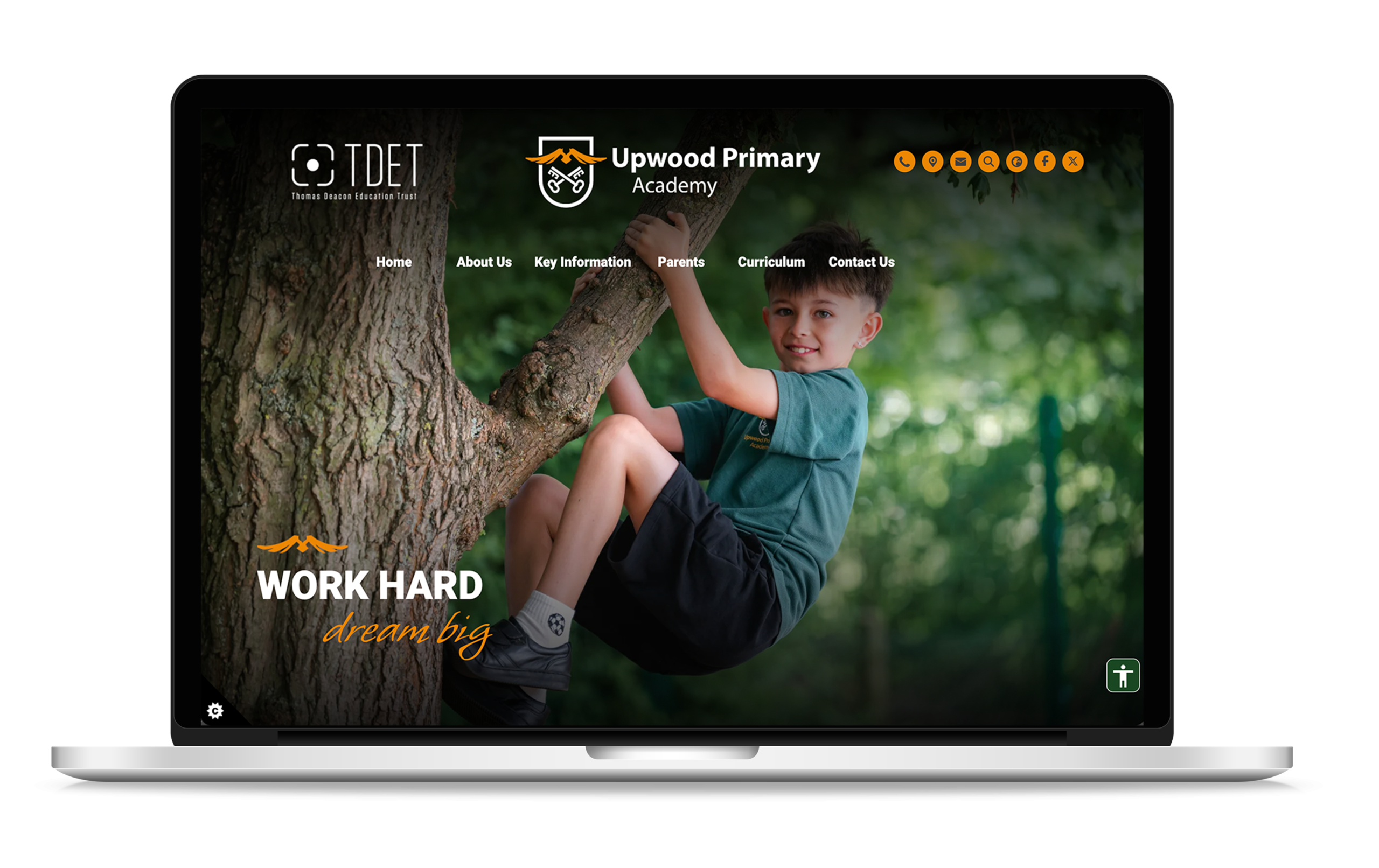
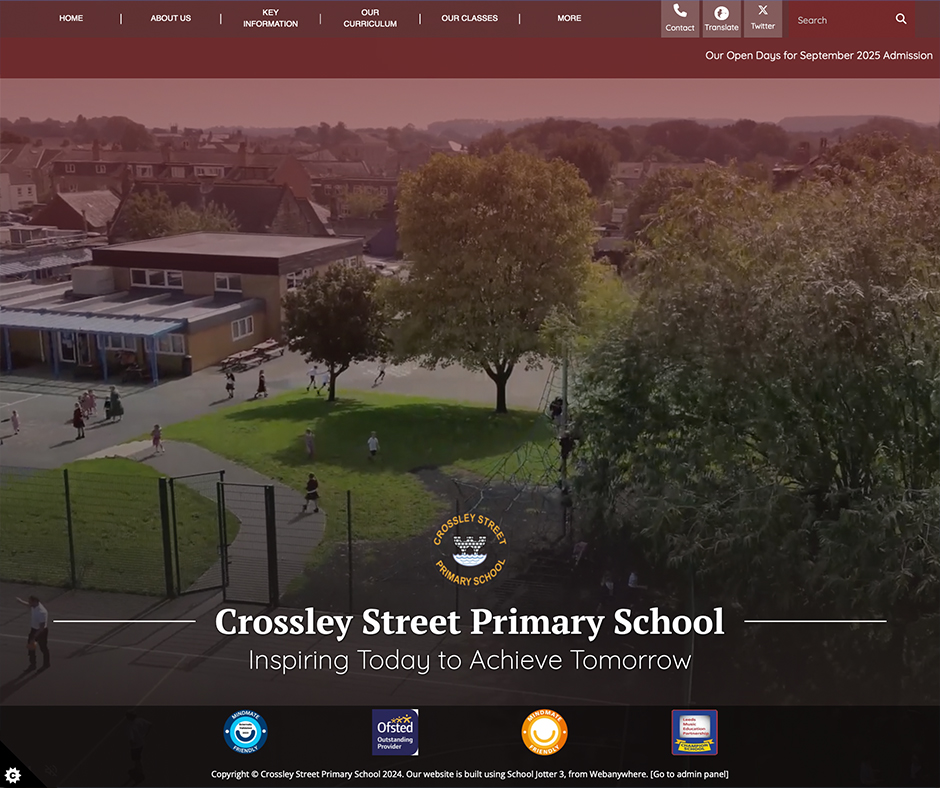
Crossley Street were looking for a high impact non scroll website that would provide an instant overview of school life to potential parents alongside clear and ofsted friendly information. We worked with the school to use their drone footage and added this onto the front of the website. We then used a clear navigation system to signpost to parents how to find information within 2 clicks. The website looks great on both mobile and desktop devices. 

https://www.upa.education/

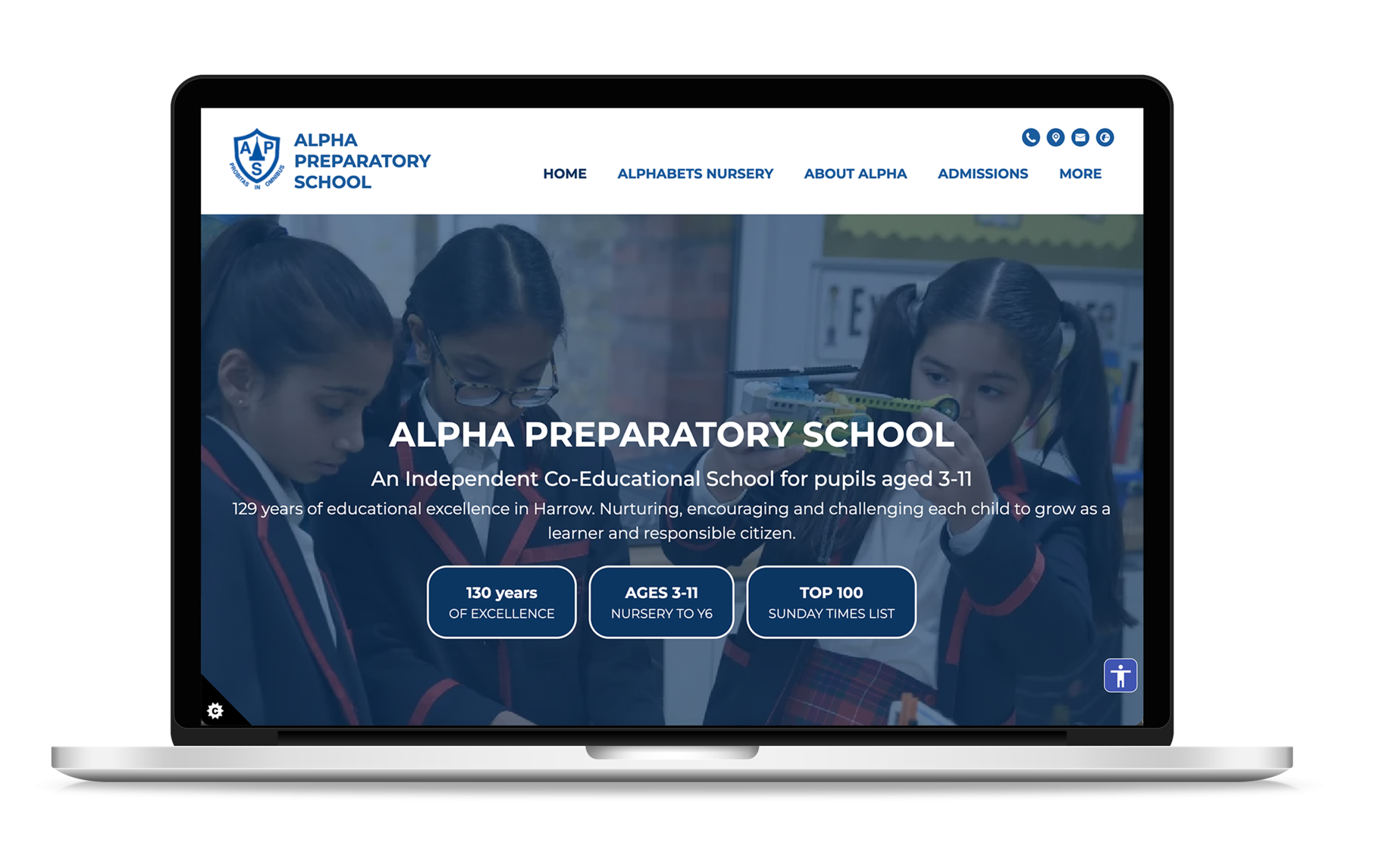
Alpha Preparatory School

Alpha Prep Mockup Website Design Portfolio

Learning for life trust wanted the gold standard in school web design. The trust requested a website that appealed to both parents and pupils and reflected the nurturing settings of the school. Clear in layout, bright colours and a friendly design this website captures the essence perfectly of the school. With bright colourful headers it makes the website easy to navigate whilst being an enjoyable experience for parents,

https://www.alpha.harrow.sch.uk/

Hamilton Primary School
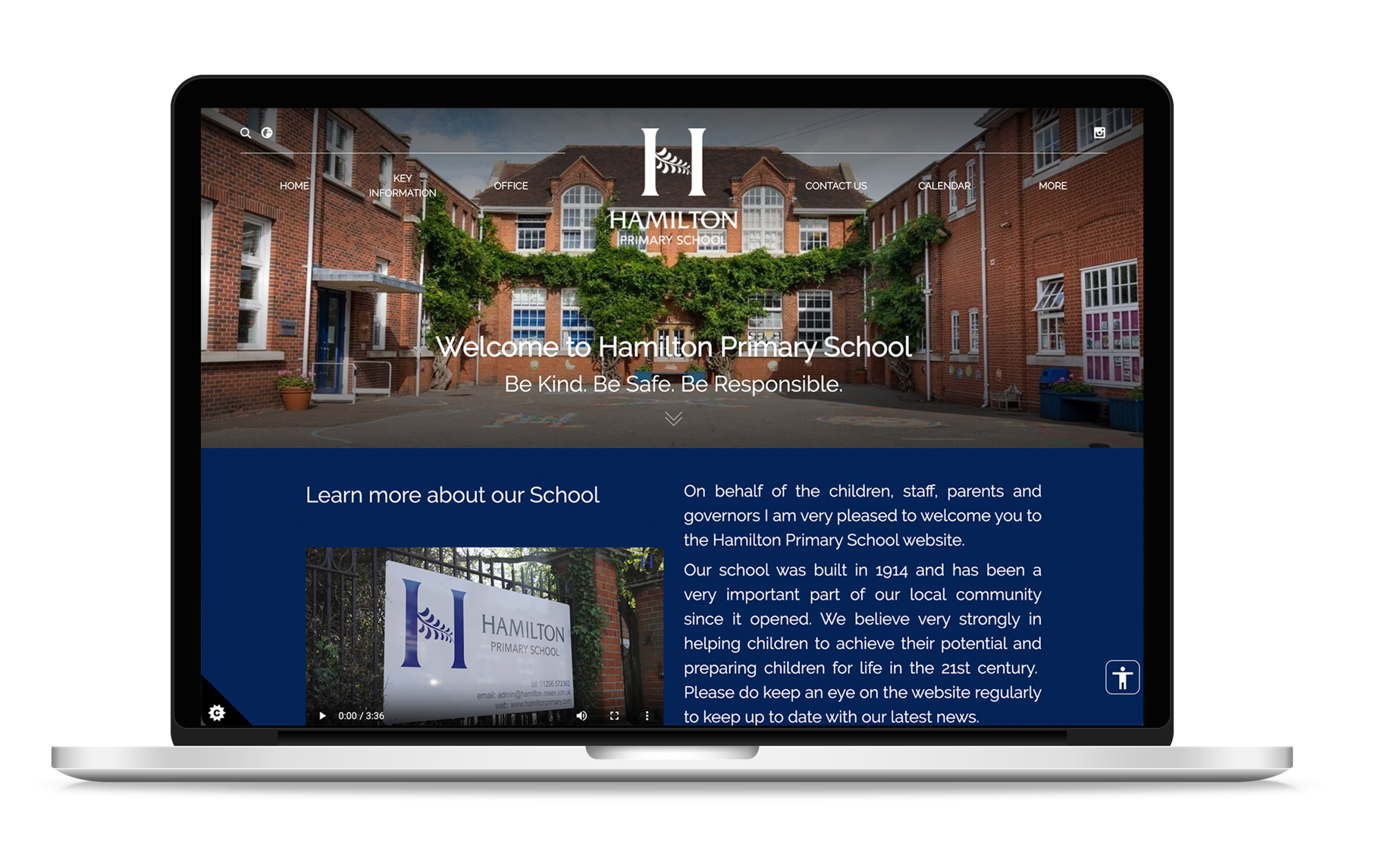
Hamilton Primary Laptop Preview

When looking for a new website St Josephs had a strong vision of what they wanted. A clear, modern, simple website. Our graphic design sat down with the Head to bring their vision to life. We also created a curriculum page for the school allowing parents to learn about the subjects taught in schools. St Josephs also have a social media wall to the left of the site meaning parents can access their social media accounts in 1 click. 

https://www.hamiltonprimary.com/

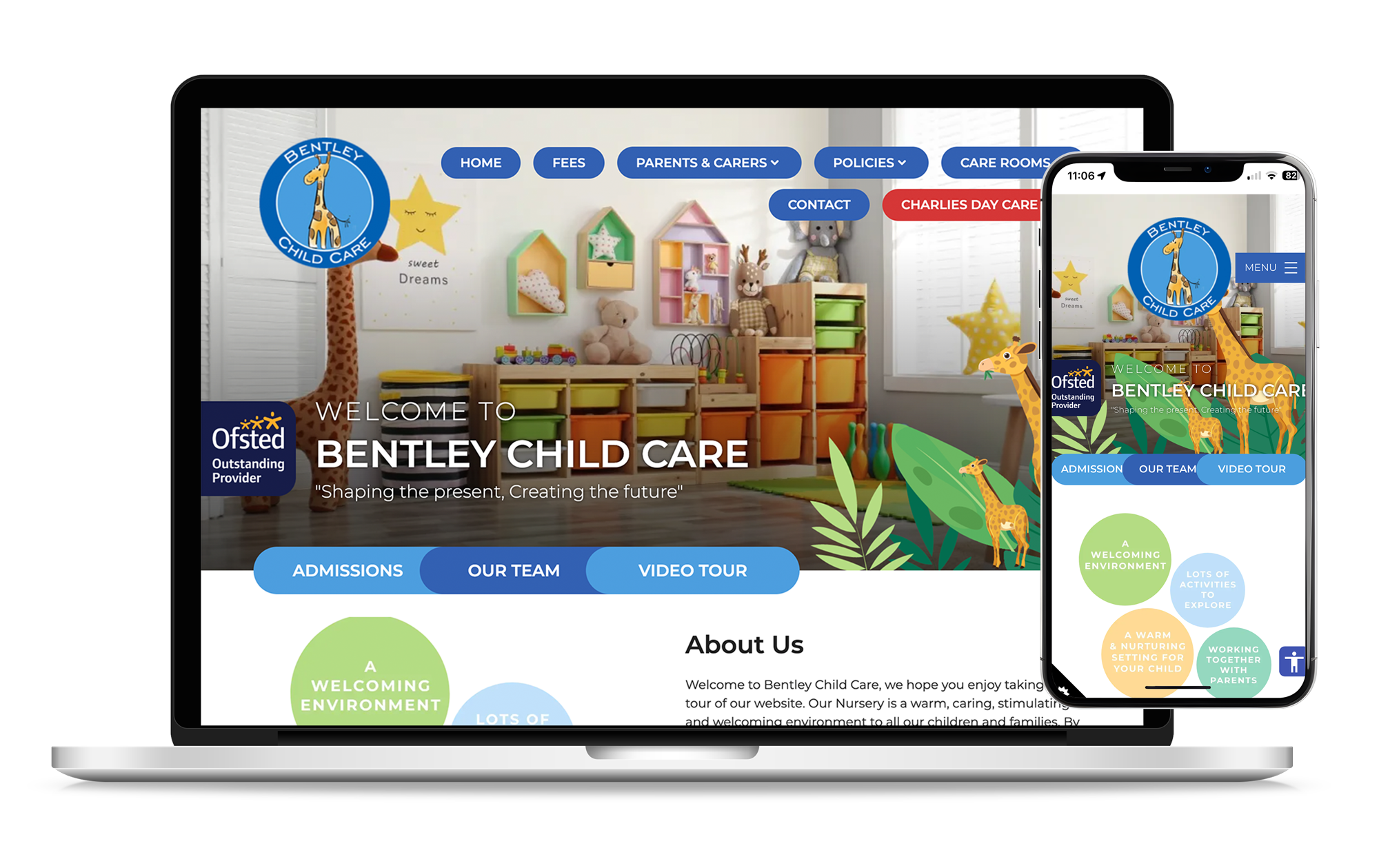
Bentley Child Care
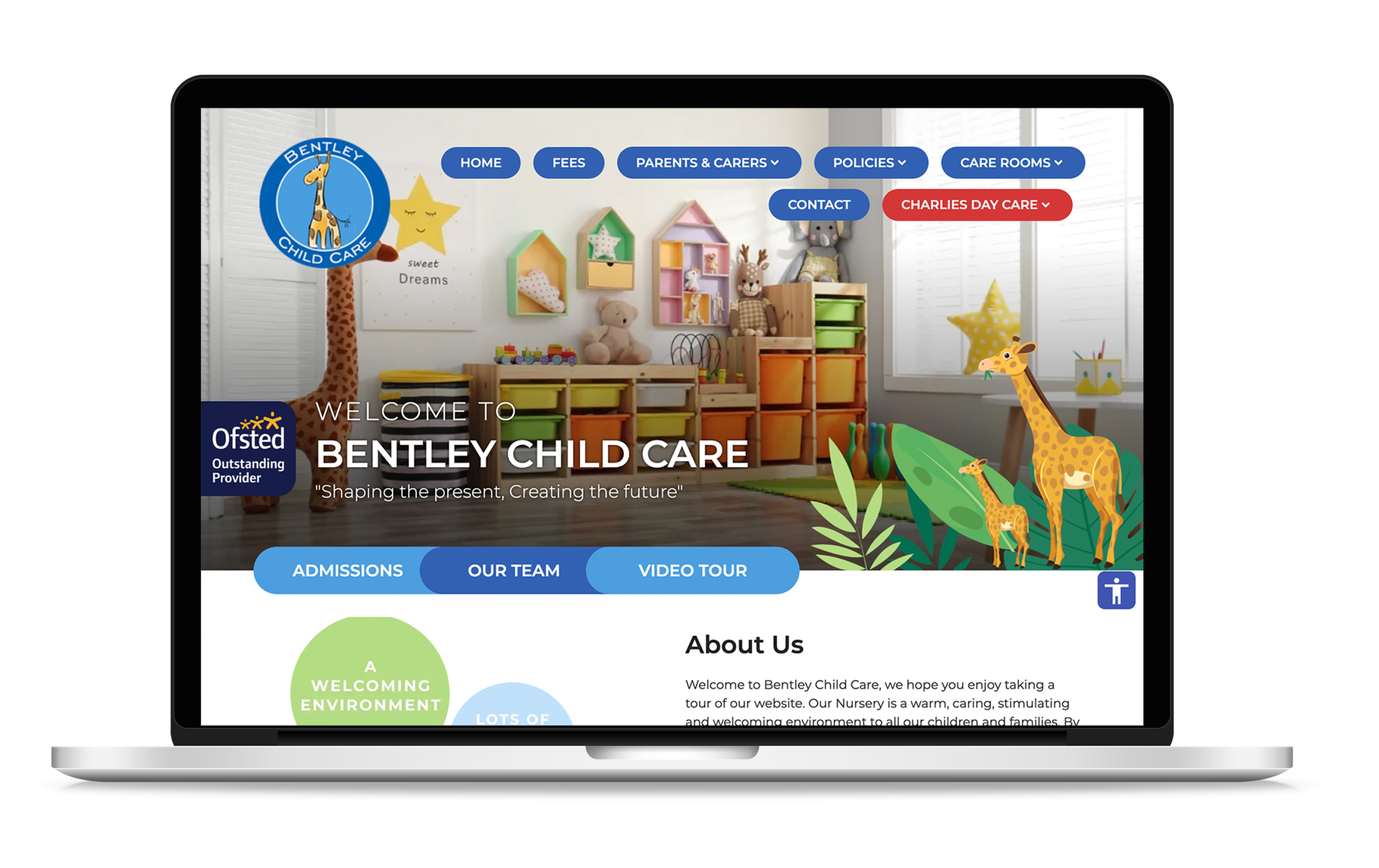
Bentley Childcare New Website Nursery Design

Dair House Private school approached us to modernise their website to attract more parents to look around the school. After speaking with the school we established what we needed to portray on the website. We focused on a clear layout but with richness of content including key dates for the diary, a video and newsletters. 

https://www.bentleycc.org.uk/

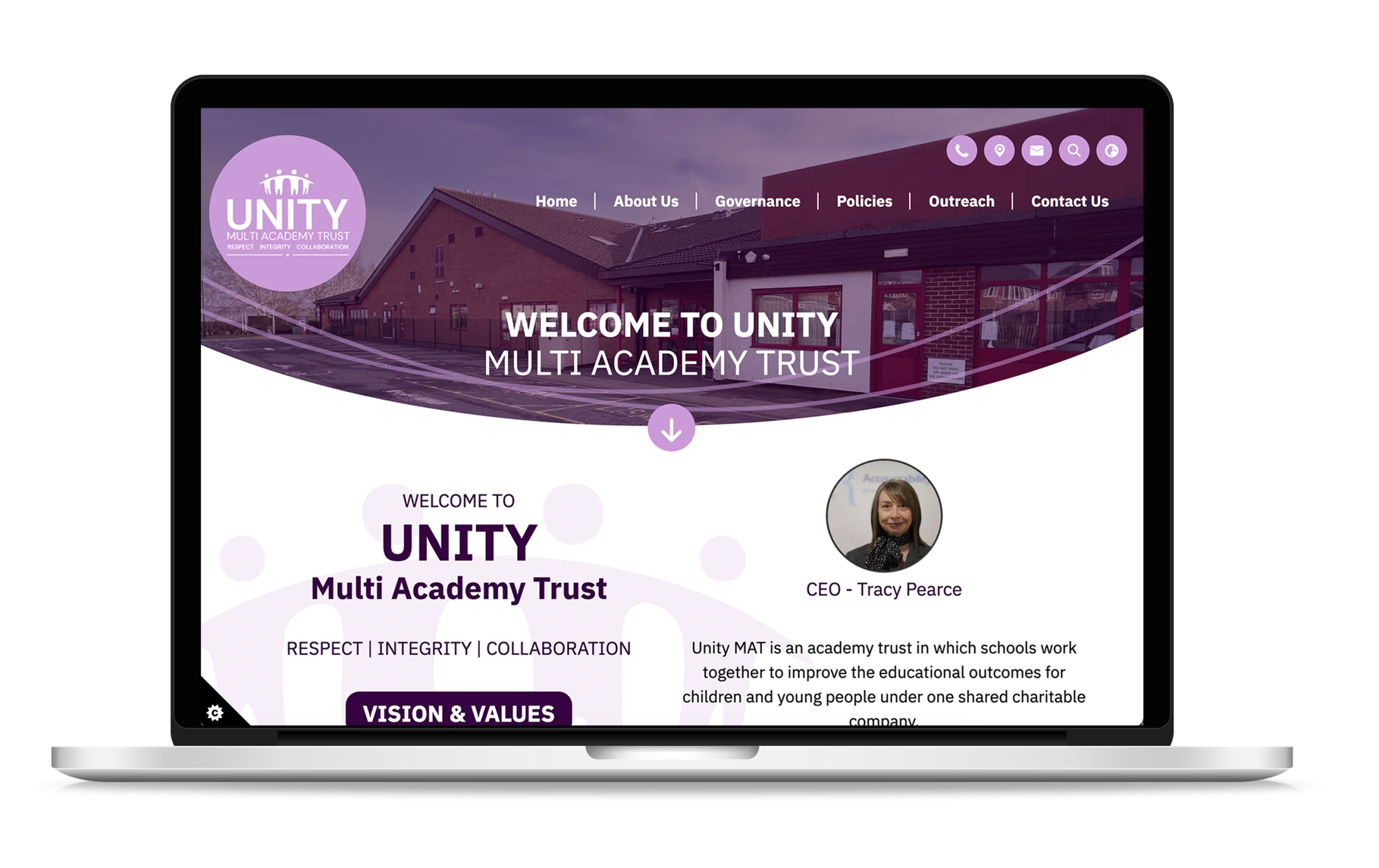
Unity Multi Academy Trust

Unity Multi Academy Trust New Website Design

Rothely C of E school wanted a website to showcase the school in spectacular fashion. We worked with them to create a fun, colourful and vibrant website. With an opening introduction song of ‘The continents’ fading purple writing as well as slideshows in the background of all pages this website lifts spirits and illustrates to parents the lively spirit of the school. 

https://www.unitymat.co.uk/

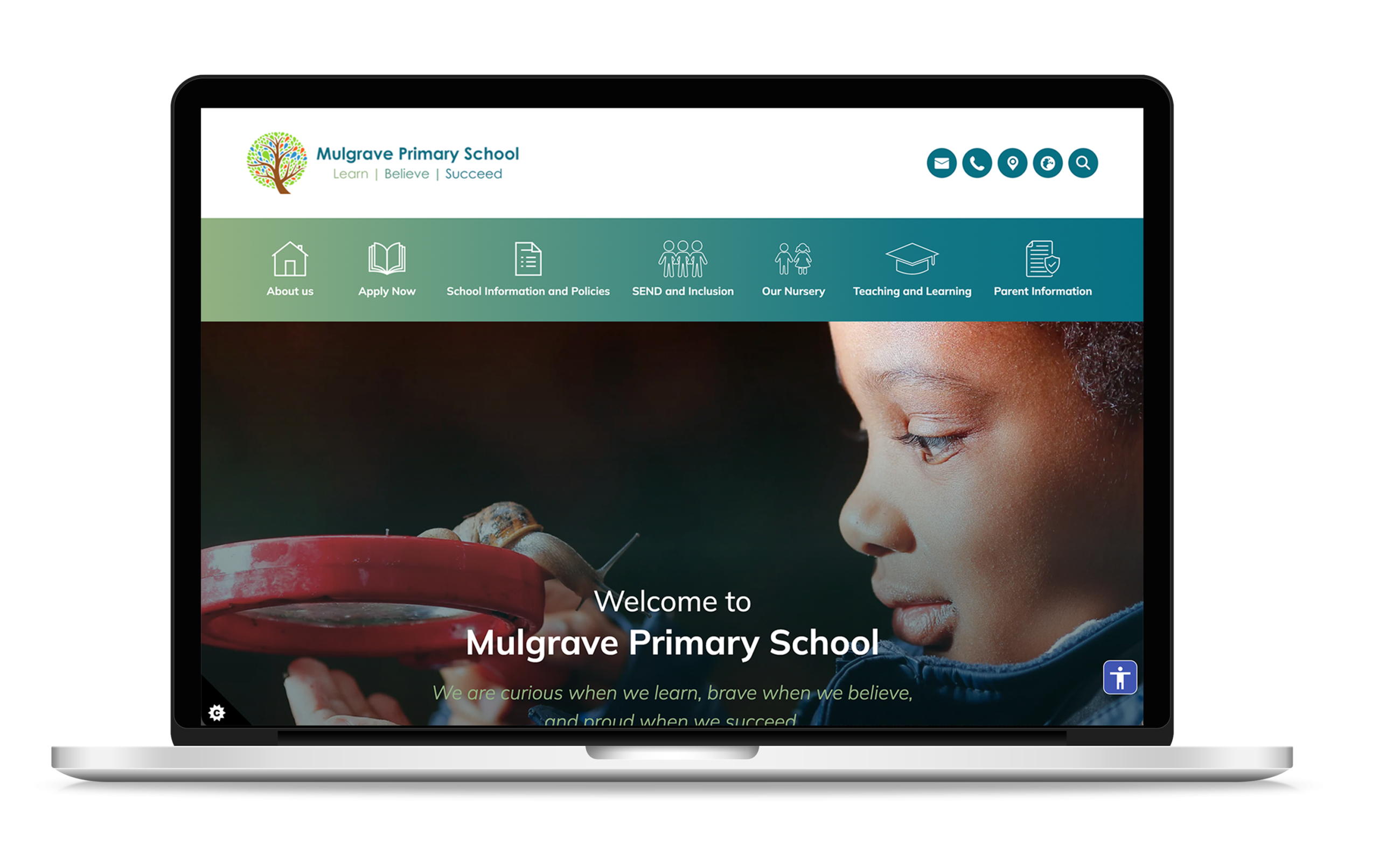
Mulgrave Primary School

Mulrave Primary School London New Website Design

Areté Learning Trust’s website mirrors its core values of excellence, purpose, and aspiration.

Inspired by the Greek concept of ἀρετή, the site is clear, modern-looking and easy to navigate. This ensures that parents, students, and staff can quickly find what they need.

With a strong visual identity and engaging content, it perfectly captures the trust’s commitment to helping every child be the best they can be.

https://www.mulgraveprimary.org.uk/

Thomas Deacon Education Trust
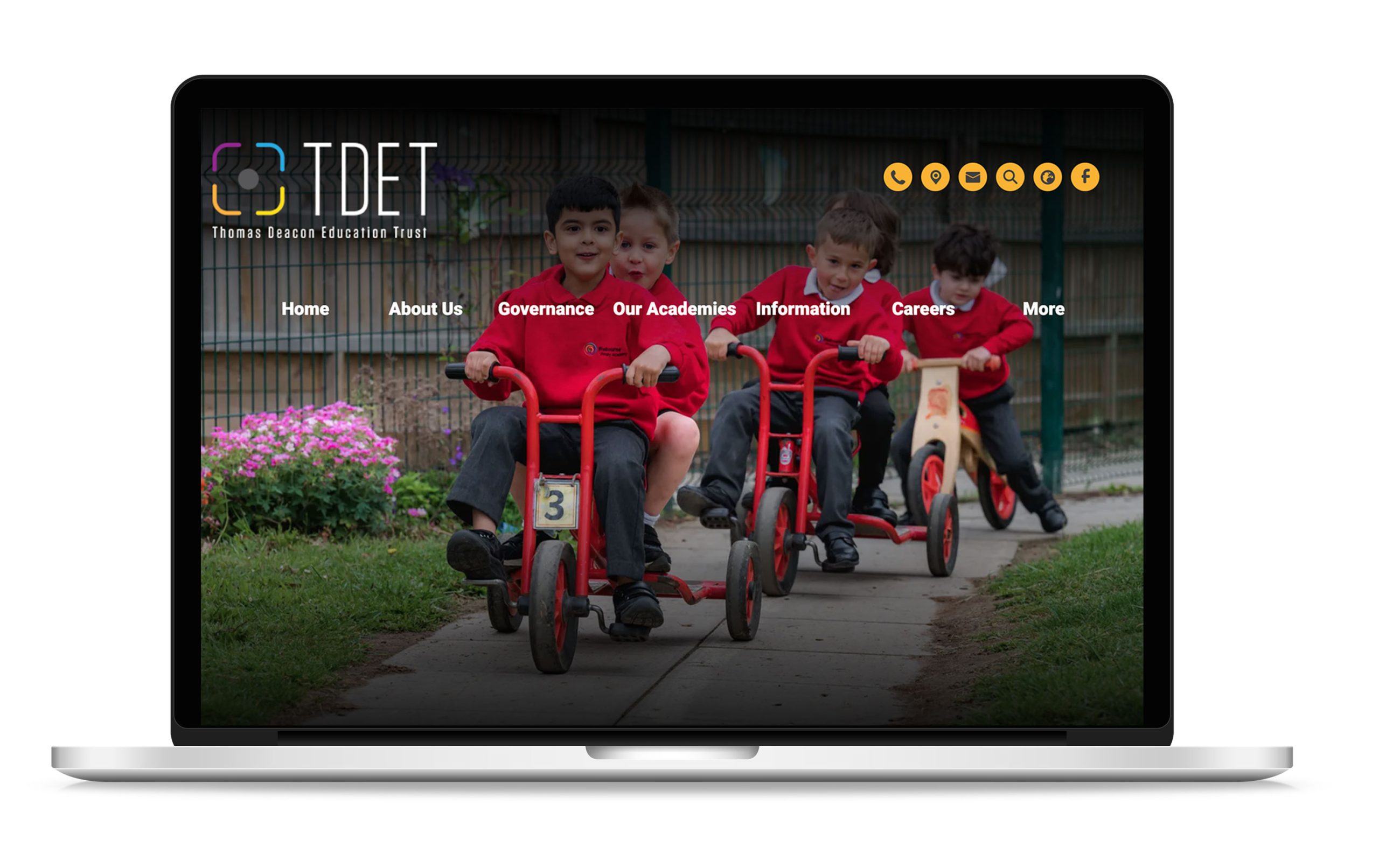
Thomas Deacon Education Trust

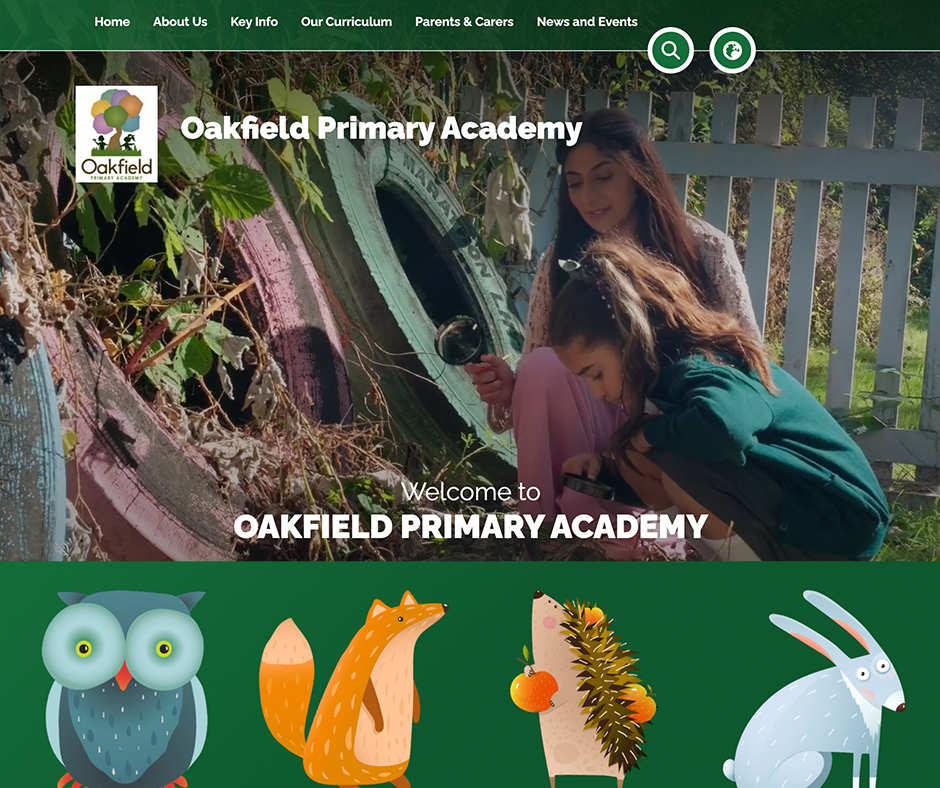
Oakfield Primary Academy’s website was designed to reflect its welcoming and inclusive ethos as it provides a clear and engaging insight into school life.

The colour and design capture the school’s ethos and branding. The website offers easy access to curriculum details, events, and key resources, making it a valuable hub for both current and prospective families.

https://www.tdet.education/


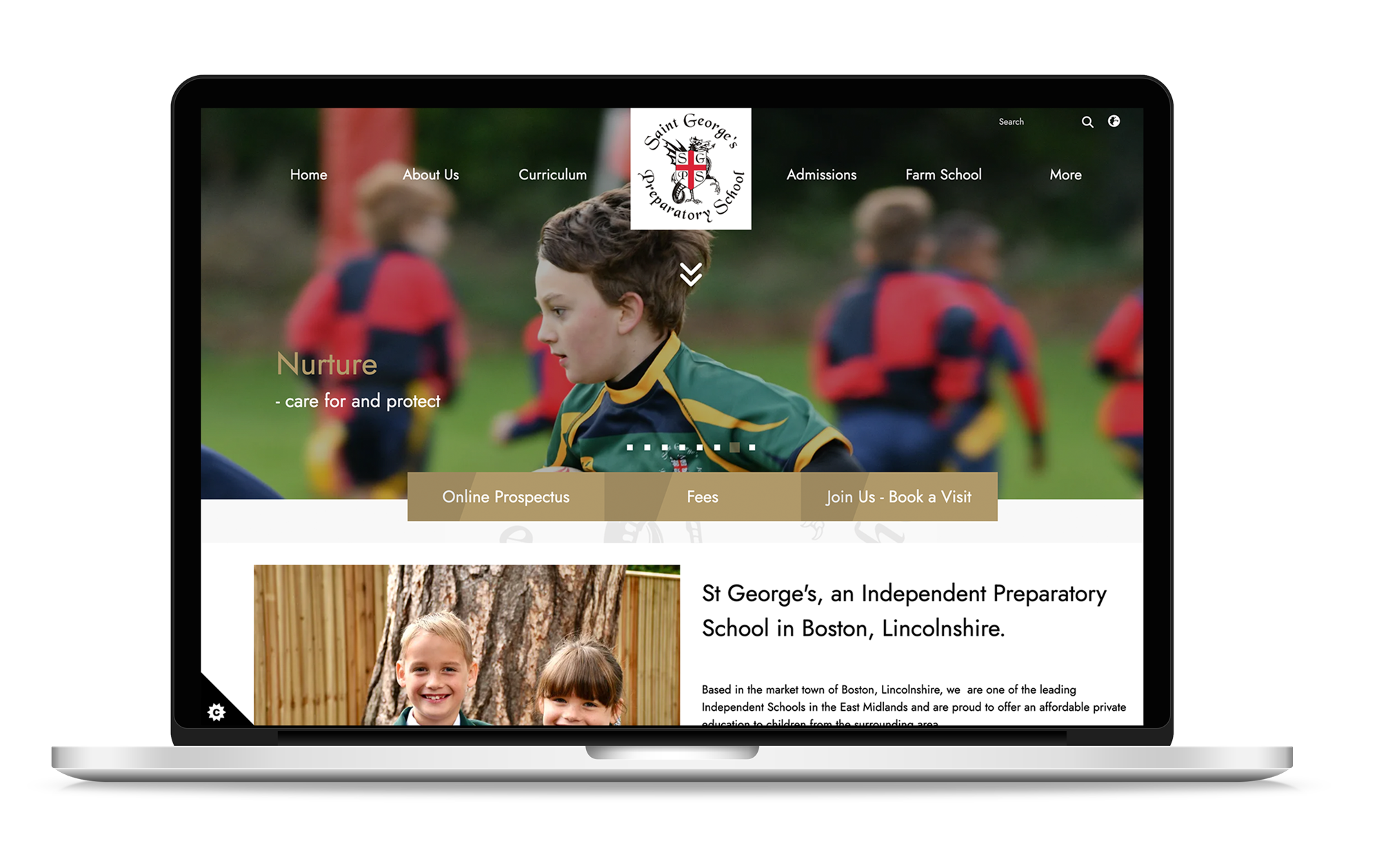
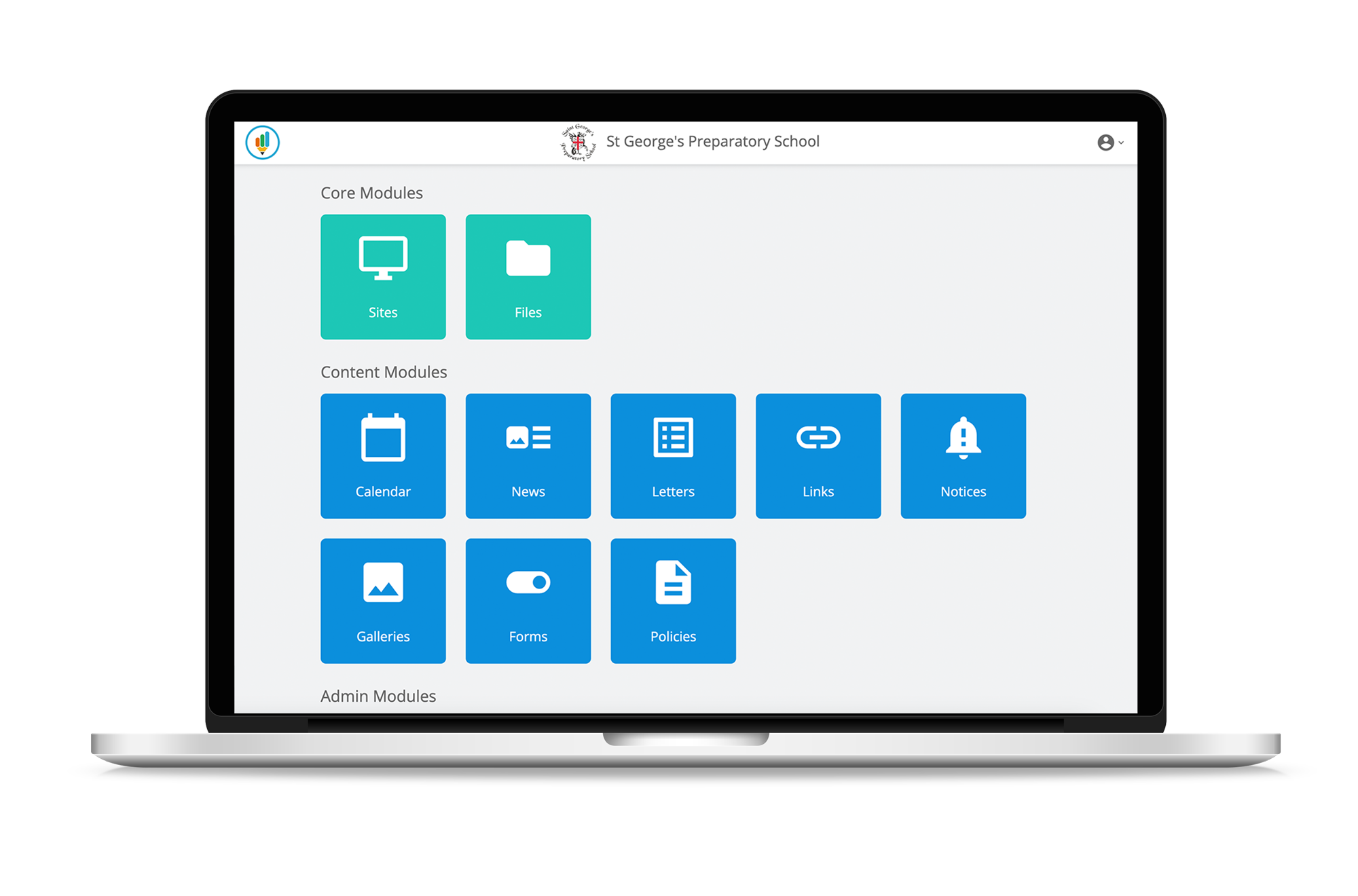
Saint Georges Preparatory School

Saint Georges Preparatory Independent School website design

https://www.saintgeorgesprep.co.uk/

Build Your Schools Perfect Website

A great school website is more than just an online presence, it’s vital for communication and engagement. The best school websites of 2026 are easy to use, mobile-friendly, and have the right information for parents, students, and staff.

Since 2007, School Jotter has helped over 4,000 schools build fast, accessible, and Ofsted-compliant websites.

Get in touch to learn more about our bespoke school website design.

5 Best Secondary School Websites 2026

Published:

cleveden secondary school

In 2026, having great secondary school website is essential. It should be easy to navigate, mobile-friendly, and designed to keep students, parents, and staff connected.

In this article, we’ll highlight five of the best secondary school websites of 2026. We’ll break down what they do well and share ideas you can apply to your own school website.

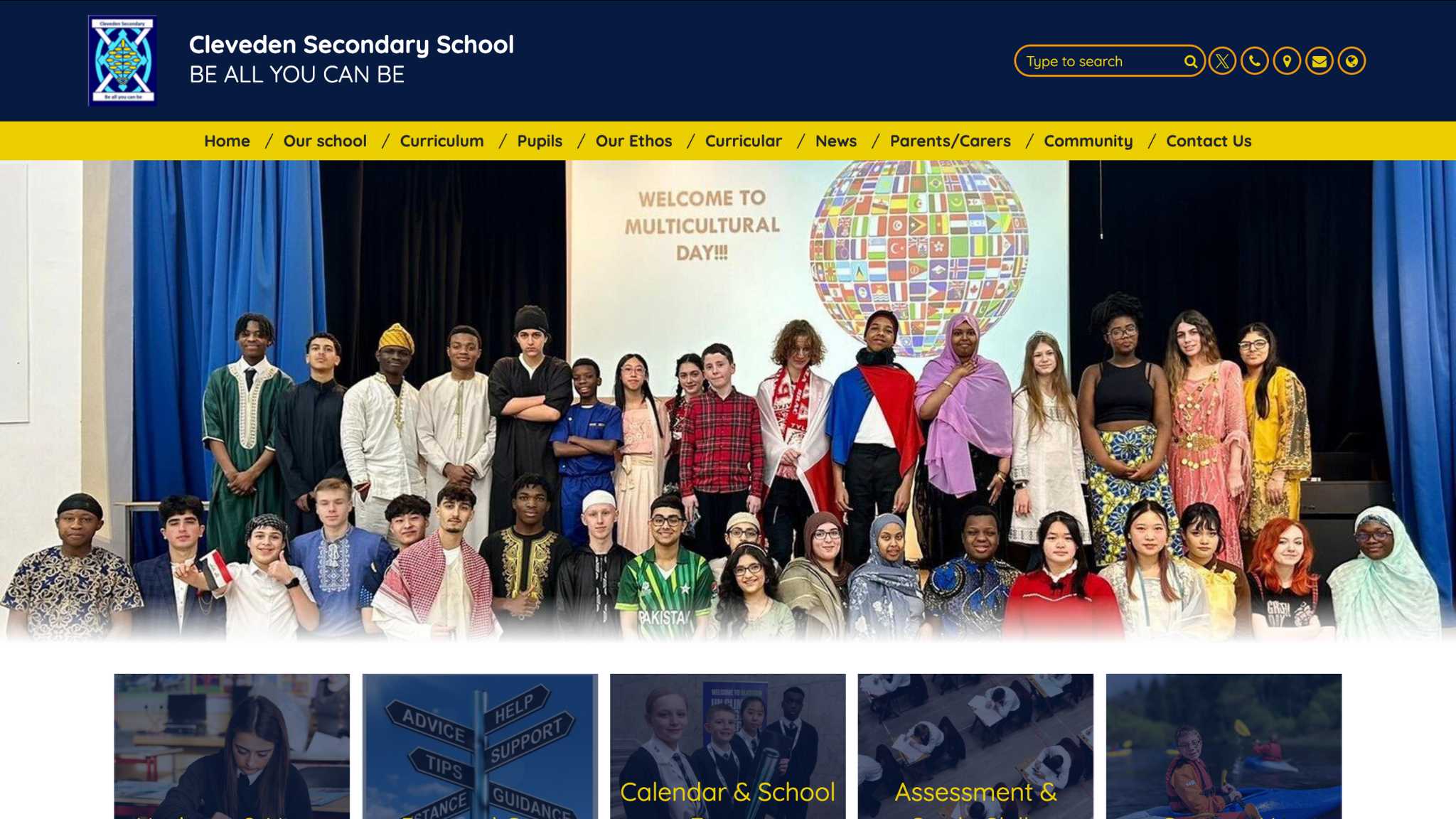
Cleveden Secondary School

cleveden secondary school

Cleveden Secondary School, based in Glasgow, is a large, inclusive school with strong ties to the local community. Over time, their website had become cluttered and inconsistent, making it harder for families to find key information. This was especially true on mobile devices, which accounted for over 60% of traffic. Staff were also spending too much time uploading and managing documents manually.

To solve this, Cleveden partnered with us to modernise their site. Using a modular page builder and drag-and-drop templates, the new site now matches the school’s branding and is easy for staff to update. A live calendar synced with Outlook 365 keeps parents informed of changes and events, while a built-in policy manager ensures all documents are up-to-date and easy to access.

Since the new website was launched, the site has halved mobile load times, doubled newsletter sign-ups, and significantly reduced support calls to the school office.

https://www.clevedensecondary.com/

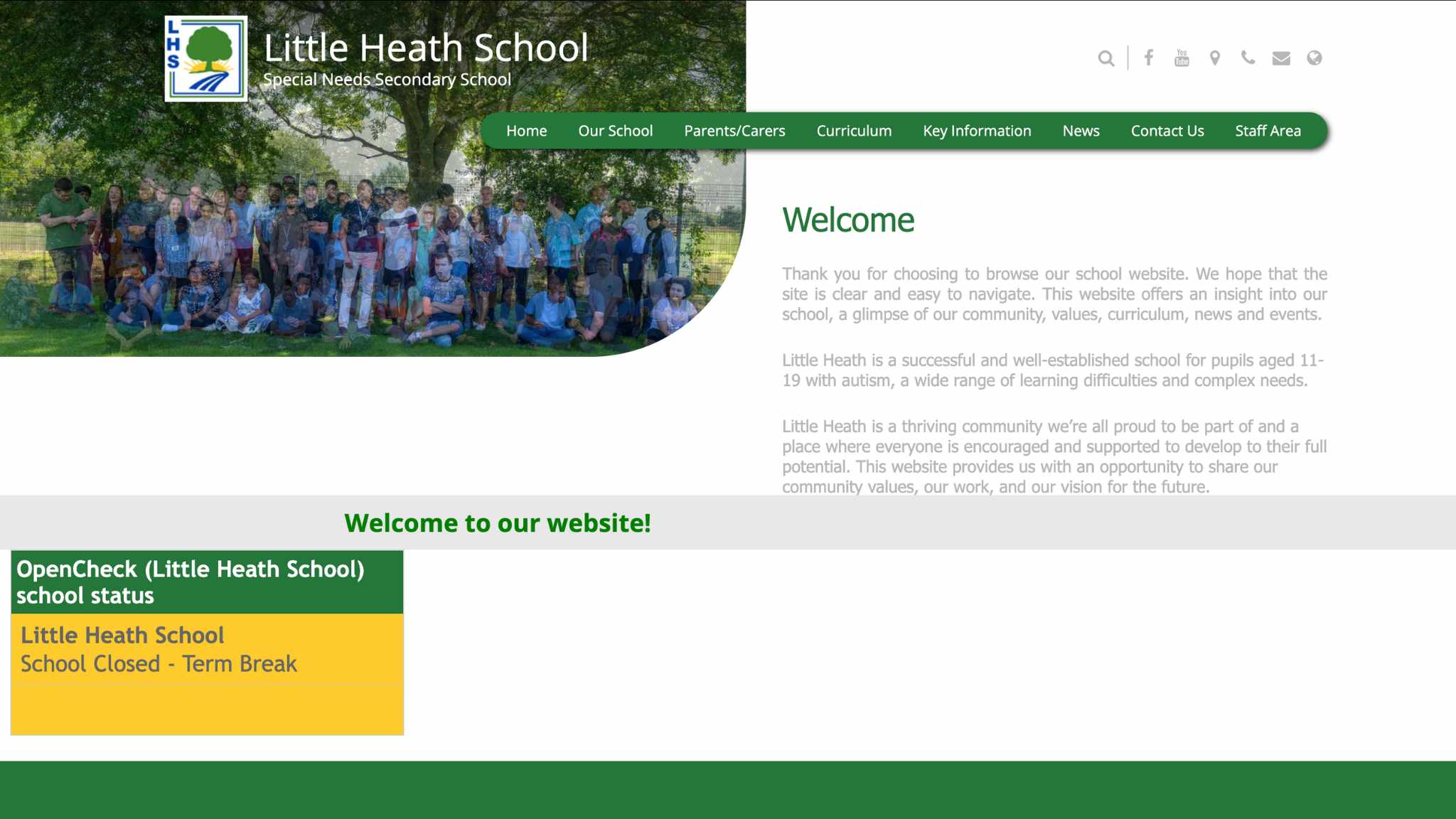
Little Heath Special Needs Secondary School

little heath school

The school’s website reflects this ethos with accessible design and thoughtful content. It highlights initiatives like the School Council, which ensures that all students, including those who are pre-verbal, have a voice in shaping their community.

This focus on empowerment and inclusion makes Little Heath’s site a strong example of how a school website can embody its values and connect meaningfully with families and stakeholders.

The website is also fully responsive, and accessible and our CMS makes it simple for staff to update.

https://www.lheath.net/

West Derby School

west derby school

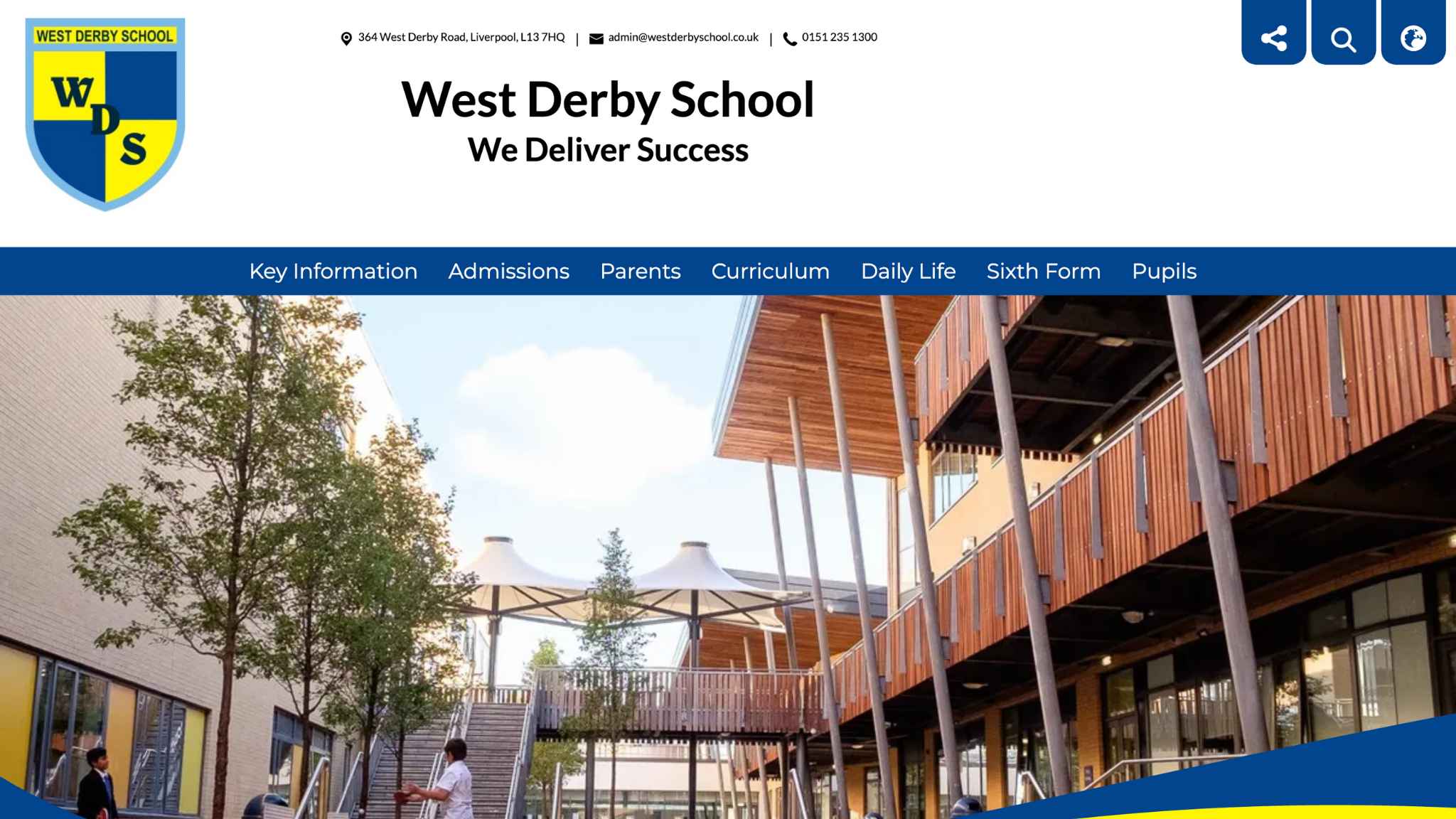
West Derby School in Liverpool wanted a clearer way to showcase opportunities. With 1,100 pupils and a busy enrichment programme, key information was getting lost.

Their new School Jotter site added a dedicated Sixth Form microsite, with subject intro videos, a live careers ticker, and a one-click Ofsted archive.

It’s made a real difference as external Sixth Form applications have increased by 18%, and visitors now spend more than twice as long on the site. The school even won “Best Use of Technology” at the 2024 Liverpool Learning Awards.

https://www.westderbyschool.org/

The King’s School

the kings school

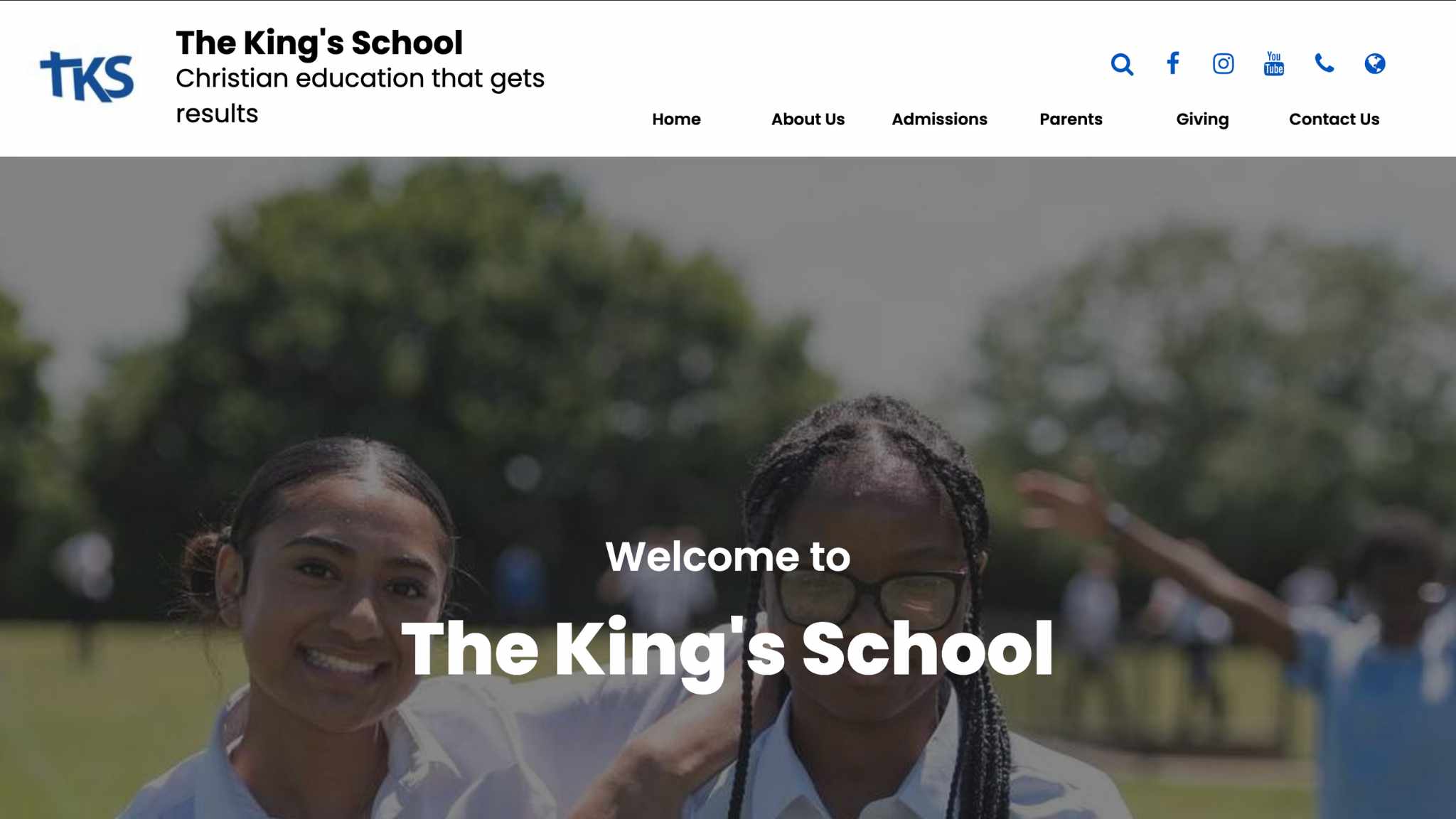
The King’s School in Witney wanted a website that reflected its Christian values and close-knit learning environment. The old site wasn’t capturing what made the school unique, and enquiries had stalled.

Their new website focused on storytelling, with Bible verse rollovers, pupil voice audio clips, and a custom prospectus builder. Parents could also select what mattered to them, like SEND or music to get a tailored PDF.

The new secondary school website has been a massive success. Enquiries rose 55% in the next admissions cycle, and £18k was raised for bursaries in just eight weeks. With staff now able to update pages themselves, IT support requests dropped to near zero.

https://www.tkswitney.org.uk/

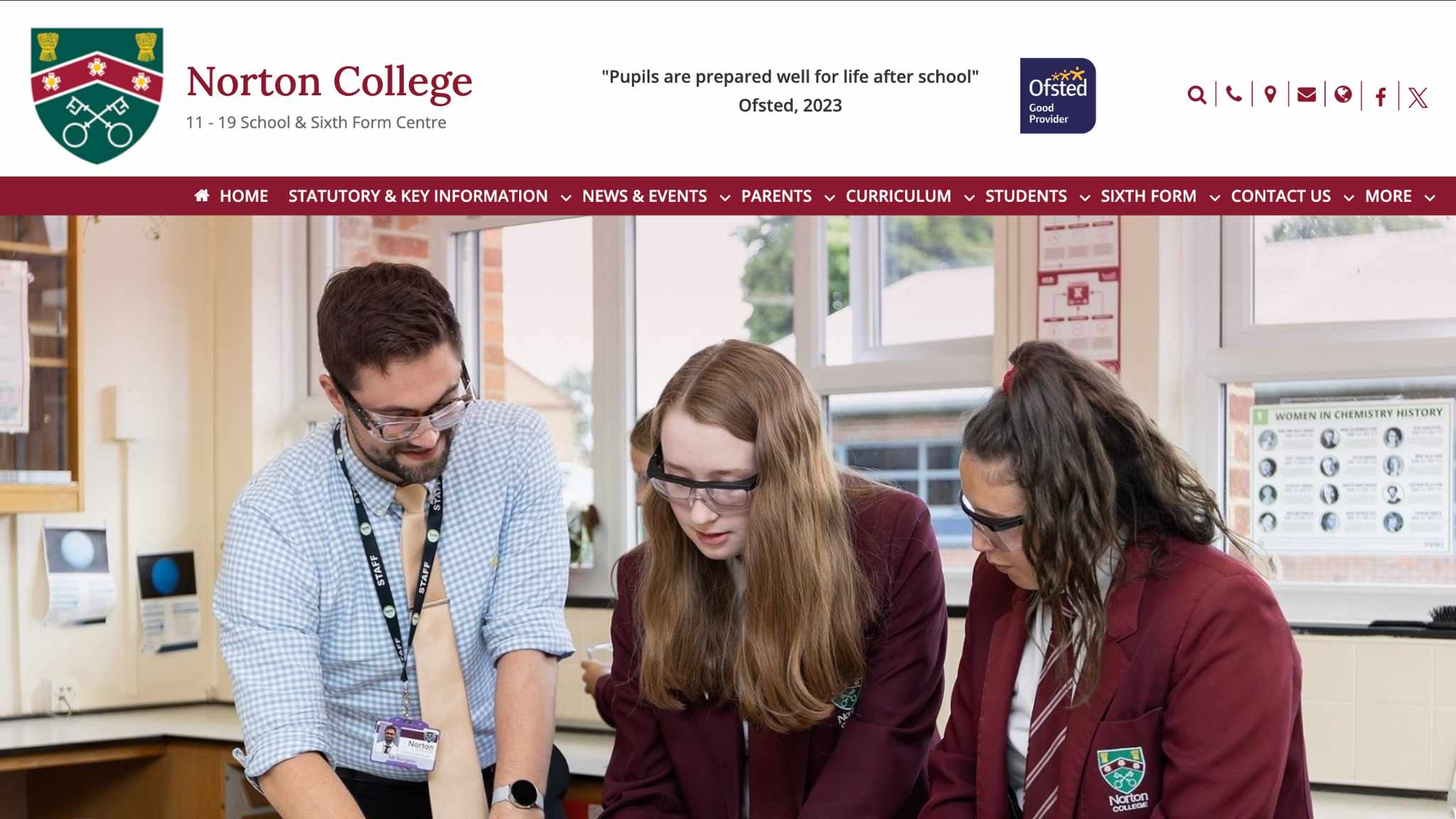
Norton College

norton college

Norton College needed a website that could reflect its role within the Ryedale Learning Trust while keeping a local and student-focused feel. Branding was inconsistent, and Sixth Form promotion needed a boost.

Their new trust-ready site solved both. It shared content like policies auto-pulls from a central hub, while school colours and crests update automatically.

A student newsroom keeps the site fresh, and live widgets display Sixth Form places and transport updates in real-time. Since launch, Sixth Form open-evening sign-ups beat targets by 24%, mobile bounce rates dropped by over half, and duplicate content uploads across fell by 70%.

https://www.nortoncollege-rlt.co.uk/

Ready To Build The Perfect Secondary School Website

A great secondary school website should do more than just look good. It should be easy to navigate, and mobile-friendly, and people stay connected. The best school websites in 2026 make finding key information simple, whether it’s timetables, policies, or Sixth Form details.

Get in touch with our team today to learn more about our school website design services.

10 Must-Have Features for School Websites in 2026

Published:

school website design trends

A well-designed website is crucial for schools. It’s the central hub of all information that parents, students, and staff need to access and navigate.

A good school website increases communication and engagement with parents and the wider community. It has the most recent information, news, and tools regarding recent events and developments.

In this article, we will discuss the top 10 features that school websites should have in 2026 to guarantee that your school has an up-to-date, effective, and compelling online presence.

1: Mobile Responsiveness

It is important to have a website that is compatible with all devices including phones and tablets. Since more and more people use mobile internet, schools need websites that are easy to use and look good on small screens.

Mobile responsiveness enhances a user’s experience as it enables them to find their way around the site and locate the information they need regardless of the device they are using. It also improves accessibility to make sure everyone including parents and students who rely on their phones for instant information and updates can be able to use the website easily.

2: User-Friendly Navigation

Intuitive navigations are essential for helping website visitors find the information they need quickly and easily. A well-organised website ensures visitors aren’t frustrated searching for important details.

To achieve this:

  1. Organise content logically by grouping related information.
  2. Use clear, descriptive labels for menu items, and keep the menu structure simple.
  3. Ensure key sections like calendars, news updates, and contact information are easily accessible from the main menu.

This approach improves the user experience and makes it easy for parents, students, and staff to get the information they need.

3: Secure Portals for Students and Staff

Secure login areas are vital to protect private information and to give individuals access to the information in the school. Students and staff need a place to log in and access and control private information safely.

Secure portals may have areas for resources such as homework, grades, and internal communications. This makes it easier for students to assess their performance and get access to their work.

It also helps simplify communication and reduce the administration time needed by employees.

Secure portals are useful in protecting privacy and improving the operations of schools at the same time.

4: Comprehensive CMS

A good CMS is essential for a modern school website. They allow school staff to easily update and manage website content without technical knowledge. Teachers and staff can quickly post news updates and upload resources, keeping the school’s website site current and relevant.

Using a CMS designed specifically for schools has many advantages. These systems often include many useful features tailored to schools, such as integration with current systems, tools for managing class schedules and absence reports.

5: SEO Optimisation

SEO is can increase the number of visitors your school website gets. When your site appears higher in search engine results, it’s easier for people to find important information about your school.

To optimise your school websites content, use relevant keywords that parents and students might search for, such as “school calendar,” “homework help, or “school news. Write clear and informative meta descriptions for each page to give a snapshot of the content’s topic. It’s also important to regularly update your site with fresh content, like news articles and event updates. This to keeps your website relevant and engaging for both search engines and users.

6: Integrated Calendar System

A dynamic calendar informs your school community about important dates and events. It makes sure that everyone stays up-to-date with school activities, from holidays and teacher training days to sports events and school trips.

Integrating features like reminders and event notifications can make your school’s calendar even better. Parents can receive alerts about upcoming events and students can be reminded of homework deadlines and exam dates. This can improve both organisation and communication within the school community, meaning no one misses out on important information.

7: Social Media Integration

There are loads of benefits to linking your school’s social media accounts to the website. It allows people to stay updated and get real-time updates and is another platform to share news, events, and achievements with the local community. Integrating social media helps parents and students stay connected and engaged with school activities.

Social media integration also keeps content fresh. It’s a way to update your website by automatically displaying recent posts and updates from platforms like Facebook and Instagram. This not only increases community engagement but also showcases the daily life of your school to prospective families.

8: Multimedia Galleries

Photo and video galleries can visually showcase school events, achievements, and activities. They show a glimpse into daily school life, making it more appealing to current and prospective families.

Updating pictures and videos regularly is crucial to keep your school’s website current and engaging. Fresh content captures ongoing activities and can tempt visitors to return frequently to see the latest updates.

9: Multilingual Support

It’s important that non-English speaking parents and community members can view your school’s website so a translation feature is crucial. Having an international website means that everyone can access important information, making the website more inclusive.

This feature significantly improves communication by breaking down language barriers. Multilingual website support demonstrates your school’s commitment to diversity and inclusivity and creates a more welcoming and supportive community for all families.

10: SSL Certificates and Security

The security of your school’s website security is essential. Protecting data like student records, personal details, and internal communications is crucial to maintaining trust and confidentiality (plus it’s a legal requirement).

SSL certificates play a role in this protection. They encrypt data shared between the user’s browser and the website. This means that any information shared remains private and secure. Implementing a SSL certificate helps safeguard against data breaches and cyber threats, ensuring a secure online environment for your school websites users.

10 Must-Have Features for School Websites in 2026

A good school website needs to be mobile responsive, user-friendly, and equipped with secure portals for students and staff.

It should feature a complete CMS designed for schools, be optimised for SEO, and have an integrated calendar system.

Schools should review their current websites and consider incorporating these must-have features. Doing this will ensure their websites remain competitive, effective, and able to meet the needs of their community in 2026 and beyond.

Get in touch to discuss how School Jotter can help you build the perfect website for your school.

7 Best Primary School Website Designs 2026

Published:

Hawksworth

In 2026, having a great school website is a non-negotiable. A good website should be simple to use, look great on any device, and help families stay connected with school life.

In this article, we’ll take a look at seven of the best primary school websites of 2026. We’ll highlight what makes them work so well and share a few ideas you can use for your primary school’s website.

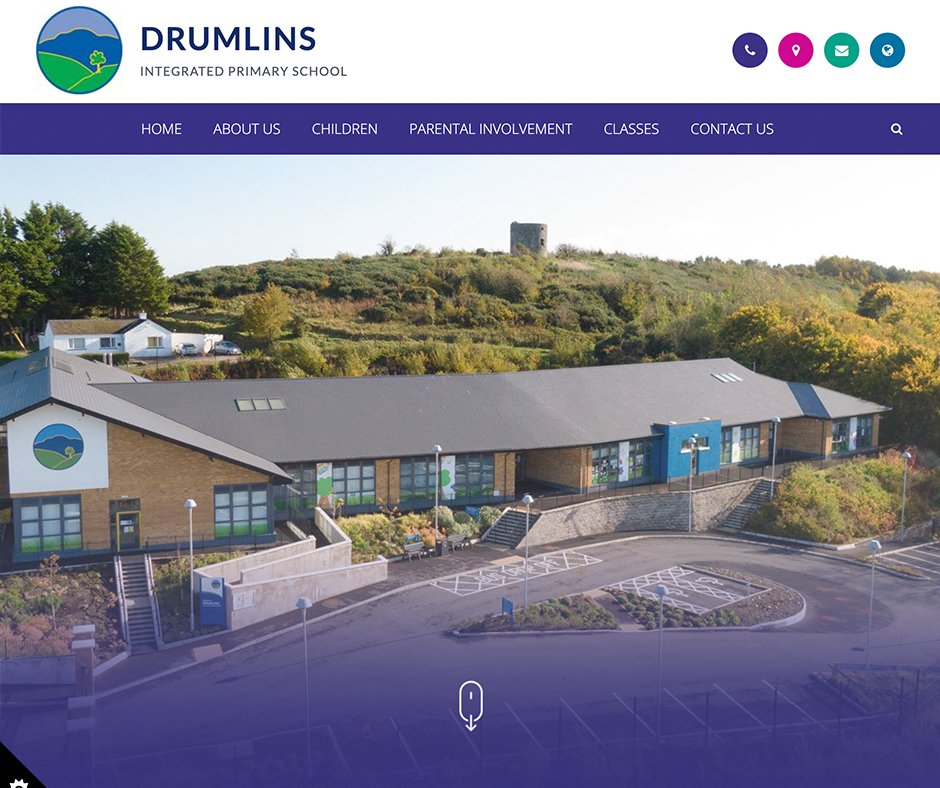
Drumlins Integrated Primary School

Drumlins Integrated Primary School

The Drumlins Integrated Primary School website is clean, bright, and easy to navigate. It uses friendly colours and simple layouts that make it feel welcoming and accessible. Key information is easy to find, and the tone throughout reflects the school’s inclusive values.

The design supports the school’s message of learning together with respect. This makes it a great example of how a school website can reflect its ethos.

Crossley Street

Crossley Street Primary School’s website strikes a great balance between warmth and professionalism. The design is clean and easy to navigate and has clear sections for parents and visitors.

Their website does a great job of showcasing the school’s achievements and community spirit and also highlights its inclusive values. The use of photos and simple language helps bring the school’s ethos to life, making it feel welcoming, ambitious, and full of opportunity.

https://www.crossleystreet.leeds.sch.uk/

St Thomas’ Church of England Primary School 

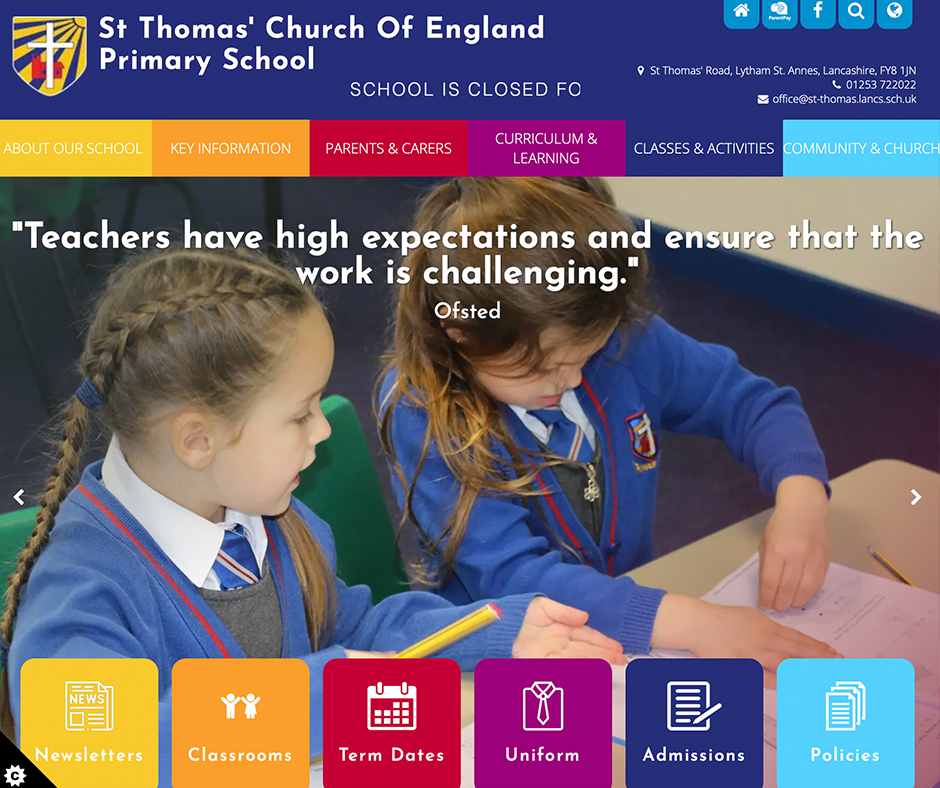
The St Thomas’ CE Primary School website perfectly captures the school’s caring, community-first ethos. It’s bright, welcoming, and easy to navigate, with clear information for parents and visitors.

Their primary school website highlights what makes the school special, from its family atmosphere and strong Christian values to its brilliant Forest School programme and impressive eco credentials. It’s a lovely site that reflects the school’s warm personality and wide range of opportunities for every child.

https://www.st-thomas.lancs.sch.uk/

Warwick Road Primary School

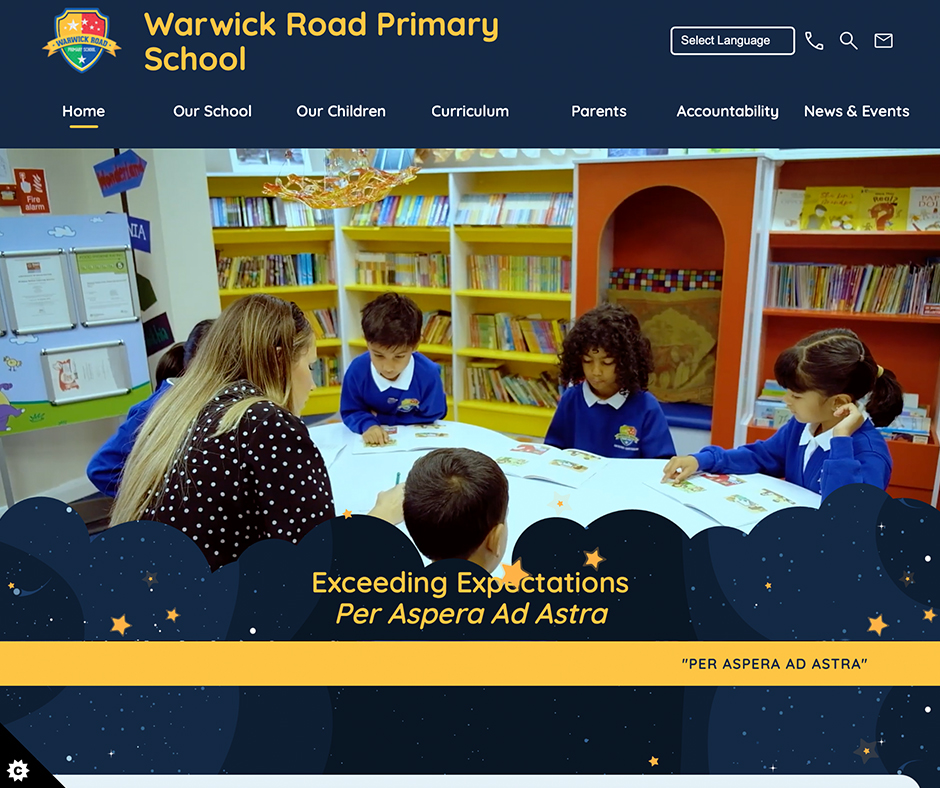
The Warwick Road Primary School website is clear, welcoming, and easy to use. It reflects the school’s aim to help every child ‘Exceed Expectations’ and highlights their strong links with the local community.

The primary school website is well-organised, making it simple for parents to find key information. It also showcases regular updates, newsletters, and details about school events, giving a real sense of the school’s caring and ambitious ethos.

https://www.warwickroad.kirklees.sch.uk/

St Josephs, Oldham

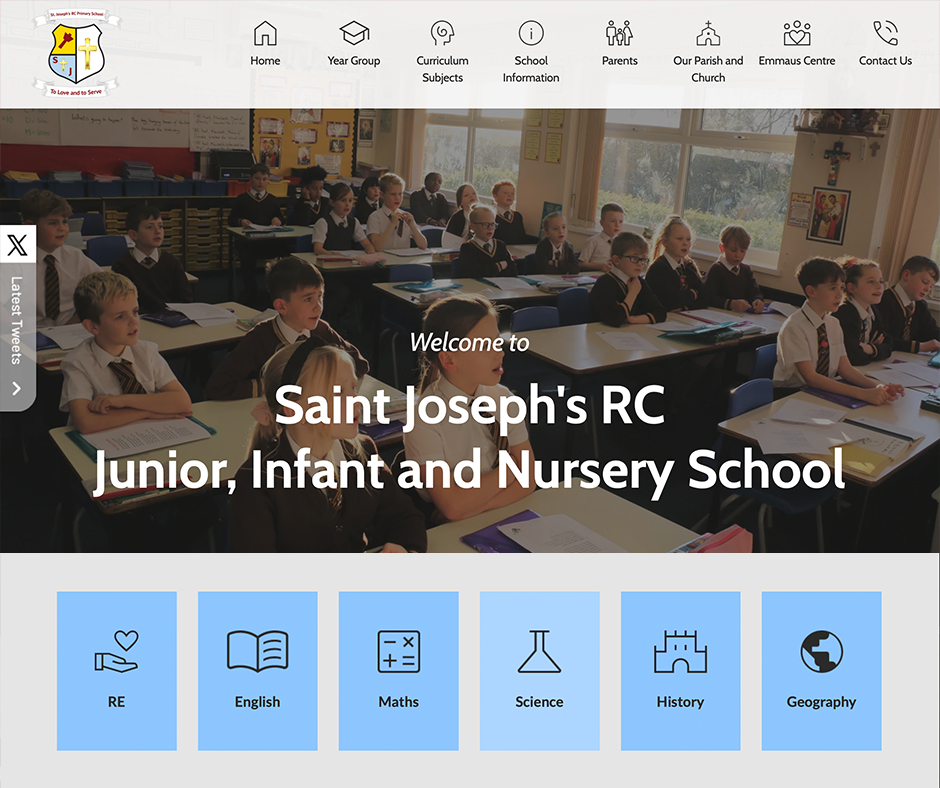
The Saint Joseph’s RC Primary School website has a warm and welcoming feel, much like the school itself. It reflects the school’s strong faith foundation and sense of community.

The website has a simple navigation menu that allows users to easily access key information such as curriculum details, year group pages, and school news.

https://www.st-josephs.oldham.sch.uk/

Oakfield Primary Academy

oakfield

The Oakfield Primary Academy website is bright, friendly, and easy to explore. It reflects the school’s focus on growth and inclusion.

The layout is simple and well-organised, which makes it easy to find key information and get a feel for the school’s values and community spirit.

https://www.oakfieldprimaryacademy.co.uk/

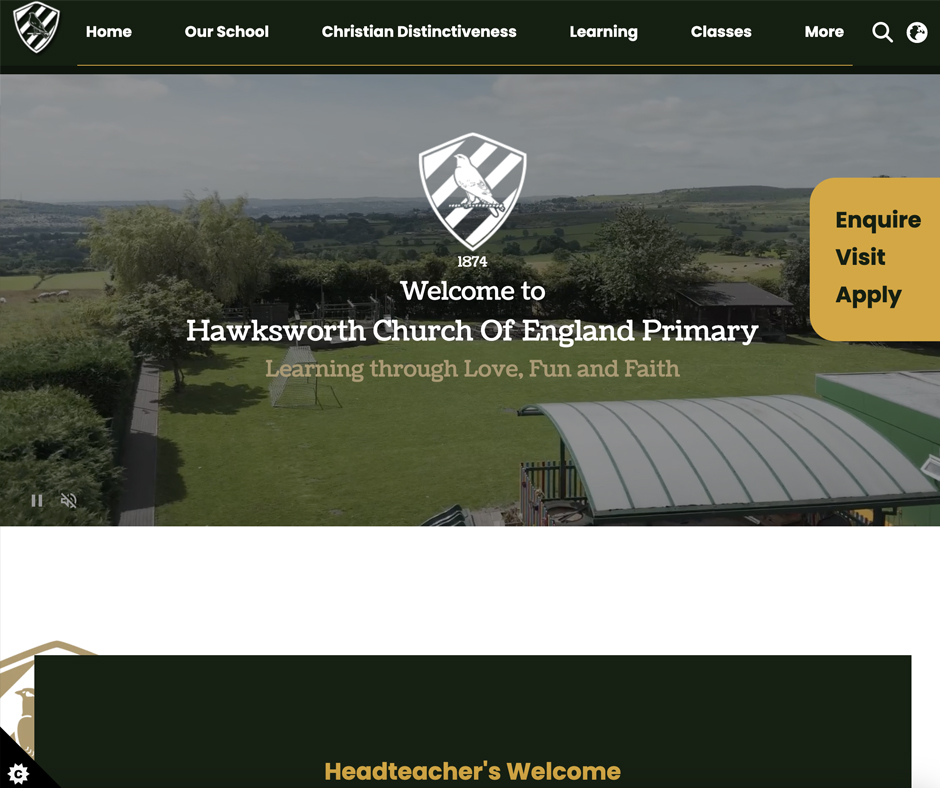
Hawksworth Church Of England Primary School

Hawksworth

The Hawksworth Church of England Primary School website offers a warm and inviting experience. It features a clean layout and intuitive navigation, making it easy for parents and visitors to find information.

The homepage includes drone footage, providing a panoramic view of the school and its surroundings. This modern touch enhances the site’s appeal and reflects the school’s commitment to embracing innovative methods to engage its community.​

https://www.hawksworthceprimary.org/

Design The Perfect Primary School Website

A good primary school website should do more than just look nice. They should be easy to use and improve communication among parents, teachers and students. The best primary school websites in 2026 work well on phones, are simple to navigate, and make it easy for website visitors to find what they need.

School Jotter has been helping schools build fast, modern, and Ofsted-compliant websites since 2007, and we’ve now worked with over 4,000 across the UK.

Get in touch with our team today to learn more about our school website design services.

How The Autumn 2025 Budget Affects Schools

Published: December 28, 2025

How The Autumn 2025 Budget Affects Schools

The Autumn 2025 Budget has had somewhat of a mixed reaction in the school community. While there have been many major changes that could drastically increase the amount of funding schools receive in certain areas, there isn’t much clarity about which schools could potentially receive the funding boost, not to mention the fact that the budget doesn’t allow for an increase in core school funding.

As of writing, the Autumn 2025 Budget has been unveiled for at least a month, which means we can now offer some insight into how the budget will impact schools.

Overview of the Autumn 2025 Budget

The Autumn Budget 2025 was announced on 25th November 2025. While there was an expectation that a significant portion would be dedicated to education funding, many of the policies that were introduced remain fairly unexplained, and likely will until the new year.

Education stakeholders have been watching this budget closely because, like most budgets, there will be a direct impact on how much funding a school can receive. The government had also pledged a significant investment in schooling, although it remains to be seen whether the changes proposed by the budget will have a real impact. Of course, in the case of schools, many are craving significant extra resources, since many schools are generating significant amounts of debt.

Major Funding Changes for Schools

There has been one major funding change for schools, and one non-change that is causing a lot of schools to become quite worried about their future.

Central Government Taking Over SEND Funding (from 2028–29)

Perhaps the biggest change in the budget is the central government now taking over SEND funding, something which was previously the responsibility of local authorities. Local authorities are quite pleased by the announcement, since many of them were struggling to fund SEND themselves. The government has allocated £6 billion to SEND for the transition in 2028-2029, with budgeting set to rise further in the following years. This at the cost of many of the free schools that were supposed to be built.

This does, potentially, mean that school budgets will be slightly better for helping to fund SEND. However, we cannot know for certain since the white paper on the impact of the government taking over SEND has yet to be released.

Unfortunately, many people do not believe that this is the right move. SEND will take up a healthy amount of the education budget, and many people fear this could result in a decrease in overall school funding as the years go on. Although once again, this is something that remains to be seen. However, it is somewhat suspicious that the government keeps delaying its report on this.

No Significant Increase in Core School Funding

Unfortunately, there is no significant increase in school funding. This has caused concerns amongst unions and school leaders, since many schools are already struggling with funding themselves. This is all thanks to inflation, increased running costs, and higher pay demands.

This does mean that some schools, particularly the more under-funded ones, will need to tighten their belts in some areas, or perhaps look for alternative funding options to balance the books a little. Even then, some schools will struggle which could have a long-term impact on the students. Hopefully, this is something that will be considered in the next budget.

New Education Investments Announced

The government has announced funding in a few core areas. Much of this is to help improve literacy rates among children, while also boosting learning opportunities.

£5 Million for Secondary School Libraries

£5 million will be set aside for improvements to secondary school libraries. This, on average, means £1,400 per secondary school in the UK, although we imagine that the funding won’t be evenly spread among schools. We expect schools with seriously lacking library facilities to see the most benefit from the policy.

Bear in mind that this is an extension of a previous policy from the government. By 2029, every primary school in the UK will have a library available. This is thanks to £10 million in funding. Although the size of the libraries is likely to be quite limited.

The policy should lead to improved literacy and access to books among students, particularly among students who may not be within easy reach of a public library.

£18 Million for Up to 200 Playground Upgrades

The budget sets aside £18 million for 200 playground upgrades around the United Kingdom. However, it is worth noting that we currently have no idea where those playgrounds are, nor whether schools will see much benefit from them.

That being said, the schools that do benefit from this policy could see benefits to outdoor learning and physical activity among their students. This can mean more opportunities to educate their students, while also letting students blow off a little bit of steam during their breaks.

We will need to wait for the government to see how funds will be allocated here, but some schools with limited outdoor play areas may be able to apply for some funding.

Impact on Students and Families

An impact that many parents will feel is the scrapping of the two-child benefit limit. This could increase the amount of funds that families with over two children have at their disposal. The hope is that this could significantly reduce child poverty.

While this cash won’t be funnelled directly to schools, schools should be able to see some benefit from the policy. There may be an increase in student attendance and well-being. This could directly lead to improved learning outcomes.

What This Means for School Leaders

The lack of a significant increase in core school funding is likely to cause issues for many schools, which may result in some schools looking for ways to cut costs between 2026 and 2029. While there have been mild funding increases in libraries and playgrounds, it is still unknown who will receive the cash. This will make managing budgets even harder, especially as real-world pressures continue to take hold.

While some are praising SEND reform, which could lead to an easing of pressure on local authorities, there is no indication about how it will work yet. While we will likely get an update in the early part of 2026, a lot of things could still change. This means that schools are currently unable to play for SEND reform.

How the Autumn 2025 Budget Will Affect Schools

Local authorities are likely the clear winners in the autumn 2025 budget, since SEND will now be taken off their hands. Schools that have not received much funding for their libraries, or are operating in areas with heavy poverty, may also see some benefit.

The non-increase of core school funding will likely impact all schools in a negative way, though. Budgets are already tight enough, unfortunately.

In the short term, we will likely see schools try to trim their budgets slightly, especially amidst uncertainty about how the SEND reform will pan out. However, the budget, if it works, does have good long-term prospects. Those students who fall under SEND could potentially receive increased funding for their education. The investment in libraries could also boost literacy rates. The scrapping of the two-child cap on benefits could also lead to better educational outcomes. It could be years before we see any real effect, though.

The next spending review will, hopefully, allocate more funds to schools. However, it is unknown whether there will be any significant increase. The fact that the government is not increasing now doesn’t really bode well. In fact, if they take over SEND, we could see a decrease in budgets allocated to schools, although we hope it doesn’t come to that.

Get in touch to learn about our CMSwebsite design, or marketing services.

FREE Webinar: How to present Newsletterson your school website

Category: Events

Published: December 9, 2025

Free Webinar: How to present Newsletters on your school website

With Microsoft Sway now discontinued and in maintenance mode, we know schools are looking for new ways to share newsletters and keep parents engaged.

We’d love to invite you to a FREE live webinar on Friday 12th December at 12:00PM for 30 minutes, where Lucie, our Graphic Designer, and Claire, our Education Director, will show how schools are using School Jotter to:

  • Display newsletters beautifully on their websites.
  • Make it easy for parents to access important information.
  • Strengthen communication and parental engagement.

This webinar and all the tools we’ll demonstrate are completely free, because our goal is simply to help you get the best results for your school community.

We hope you can join us and see practical ways to enhance your newsletters for parents.

Register Here: 


    How School CMS Tools Save Hours for Teachers and Parents

    Category: CMS

    Published:

    Schools are moving toward admin tools because of the increase in digital-first communication. Gone are the days when schools would hand out letters to students. Instead, it is all done via news posts on a school website or email.

    You also have to remember that there is now an expectation for faster, clearer communication with parents. Parents want all information at their fingertips, and they want that information in an easy-to-read format. Digital offers this.

    On top of all of that, there is now bigger administrative pressure on teachers. Therefore, teachers want to make their lives as much as possible. Digital admin tools allow this.

    What a School CMS Actually Does

    A content management system, or CMS for short, allows for more centralised website management. Almost everything on the website attached to the CMS can be updated from a single administrative panel, with barely (if any) technical skills required. A CMS is almost as easy to use as a word processor.

    The CMS allows for easy, rapid updates to news, policies, events, and class pages. Old school websites could have taken hours and hours to update, since you’d need to tinker with code. A CMS allows these changes to be made in minutes, with no code tinkering required.

    A CMS allows for role-based access, ensuring that teachers and office staff can only update the pages they need to.

    Time-Saving Benefits for Teachers

    While having a CMS is handy for keeping parents and staff members up-to-date with important information, there are also a few major time-saving benefits for teachers.

    Quick and Simple Page Updates

    As we said, no technical knowledge is required. If a teacher knows how to operate a word processor (e.g. Microsoft Word) then they can get to grips with updating pages in a CMS.

    In minutes, a teacher can update class pages, put homework online, and add photos.

    Consistent Information Across the School

    A CMS reduces duplicate work. Everybody will be using the same templates and tools. It makes things a whole lot easier, and cuts down on a bit of the admin related to updating school websites.

    If a school is set up with the right CMS, then everybody will be using the same templates, which ensures consistency in the style of content posted.

    Automated Workflows & Notifications

    With scheduled posts, teachers can update their content whenever they have free time. Posts can be scheduled as far into the future as a teacher wants. This can help to automate quite a lot of the content posting process, with many schools who opt for a CMS planning their content very far in advance, meaning they are not stressed getting the right information out at the right time.

    Schools need to ensure that their websites are kept up to date, so you’ll be pleased to know that a CMS can offer automated alerts for when content may be out of date or missing information, ensuring issues are caught quickly.

    How Online Forms Streamline School Administration

    While teachers will find using a CMS handy, it is the school’s administration who will often stand to see the most immediate benefit, with much of their work reduced massively.

    Replace Paperwork with Instant Digital Forms

    With a CMS there is no need to produce paperwork for permission slips, absence reporting, trip sign-ups, and payments. It can all be accomplished with a digital form.

    This means no more lost slips (students are notorious for this), and no manual data entry. Once a form is filled in, the data is automatically inputted into the system.

    Automated Data Collection

    School administration won’t need to input data manually. This reduces the chance of errors and saves a significant amount of time. This is important, since school administration is now under more pressure than ever.

    Since all submitted data is stored in the same place, it is easy to retrieve. It’ll take seconds. No more fumbling through small pieces of paper!

    Fast Response Times

    Parents can submit information from any internet-connected device they want, whenever they want. It’ll take just a few minutes. Staff will be able to have access to this information instantly.

    Benefits for Parents

    While parents won’t be able to edit the content on the CMS, they will benefit significantly from a school deploying a CMS as the back-end to their website:

    • Faster access to school information. Everything they need to know, assuming a school puts effort into updating the site, can be found easily.
    • They can access the information through their mobile device.
    • Allows them to quickly submit forms (such as those we mentioned in the previous sections), whenever and wherever.
    • Reduces miscommunication and delays.

    Real-World Time Savings (Examples)

    Schools can do a lot with the right CMS solution. Here are just a few examples of how time can be saved by utilising this technology:

    • Updating school policies can take 2 minutes instead of 20. This is because no technical knowledge is required, and updating a policy involves nothing more than typing the new words into the system.
    • Forms, including trip forms, can be sent to parents in seconds. Assuming the parent is ‘on the ball’, responses can be set back in minutes. No waiting around for students to take letters back to their parents, and the school hoping they give a quick response.
    • Absence reports can be processed automatically. No need for the school administration to be handling countless phone calls in the morning.

    CMS Benefits for Schools

    Digital communication tools, such as a CMS, can significantly reduce the workload for teachers and admin staff. A CMS will allow something to be updated in minutes which, prior to that, would have taken 10-20x as long.

    Parents benefit from faster, clearer communication. This ensures that parents always know what is going on in a school.

    To enjoy these benefits, a school should invest in a high-quality school-focused CMS. School Jotter is one of the leading performers in this category. It has been designed from the ground-up to ensure that schools can quickly deploy the right website and information they need for their staff, students, and parents.

    Get in touch to learn about our CMS, website design, or marketing services.

    Understanding Modern Teaching Methods: From Play-Based Learning To STEM & Beyond

    Published: December 5, 2025

    modern teaching techniques

    Teaching has changed quite substantially . This is due to the changing technologies, and what the future employment market may demand. Many schools, rather than having their students sit and just ‘listen’ to fact after fact being churned out are, instead, opting for more play-based and interactive learning methods.

    Here, we want to look at the evolution of teaching methods in this area, and why they have changed.

    Why Teaching Methods Have Evolved

    Sure, school curriculums often don’t evolve as fast as they should, but they do evolve. Recent evolutions of school curriculums in the UK have focused heavily on more skills-based learning, helping students prepare for 21st-century careers.

    As technology evolves, schools need to keep up. Students need to learn skills that will help them in the real world, including computing skills, teamwork, and more. Curriculums are working hard to include all of that, with a huge focus on practical skills, rather than forcing students to recite facts.
    While curriculums still need to develop a little bit, students of today should be prepared for more modern 21st-century careers.

    Play-Based Learning

    The early part of a child’s learning will be play-based learning, with almost all of this happening during primary school.

    With play-based learning, children don’t know they are being ‘taught’. They are just having fun, while also picking up useful skills.

    Play-based learning focuses on exploration, creativity, and social development. You probably did a lot of this back in primary school. For example, making clay sculptures, playing in the sand pit, etc.
    The key aim of play-based learning is to increase skills that will set a child up for their schooling life, and beyond. This includes learning communication, problem-solving, and boosting confidence.

    Inquiry-Based Learning

    As a child gets older, a lot more of their education becomes focused on inquiry-based learning. Here, children learn by asking questions and investigating. This involves a lot of science experiments and research projects. This will likely continue throughout the child’s schooling career. As the student gets older, teachers will encourage more and more independent learning here.

    Inquiry-based learning focuses on improving critical thinking and boosting curiosity, something which is essential for thriving in the modern job market.

    Project-Based Learning (PBL)

    This is very much an evolution on inquiry-based learning. The major difference is that PBL is often more long-term, and focuses on real-world projects. For example, coding a small app or website, etc. Some schools may even have their students set up a small business, or something similar to that.

    PBL will often involve team work, and may even involve aspects from different subjects, promoting cross-curricular learning.

    Since modern careers will often involve projects, the skills picked up here are essential. Students will learn about teamwork, planning, and there will also be a healthy amount of independent learning too.

    STEM & STEAM Education

    Science, technology, engineering and maths (STEM), or adding in ‘arts’ (STEAM) have become a key part of school curriculums.

    STEM matters for all modern careers, since the future will be very technology-focused. STEM also enhances problem-solving skills and boosts logical thinking. While many students hate maths and see no point to it (they think they will have a calculator everywhere they go), maths is, without a doubt, one of the most important subjects at school for this reason.

    STEM learning is now equipping students for the modern world. Many schools are now focusing on robotics, coding, and solving engineering problems. Many jobs in the future, particularly the well paying ones, will require some of these skills. So, it is best to prepare students early. Even if a student doesn’t take a career in STEM/STEAM, many of the skills learned during these lessons will help them in the future.

    Blended & Digital Learning

    Most schools will now combine classroom teaching with online tools. This may mean using educational apps, videos, and virtual labs. It, essentially, enhances the teaching while also providing a student with a degree of independent learning.

    This type of education is essential nowadays. In the past, schools focused purely on one learning style, which often left students behind. With digital tools, schools can adapt to many different learning styles, ensuring their students learn in the right way.

    Many digital learning experiences also offer personalised pacing for students, ensuring that a student doesn’t ‘move on’ until they can fully grasp a concept.

    Differentiated Instruction

    Once again, schools of the past were very much focused on one learning style, and they had a fixed pace to keep. This meant many students, some of whom could be quite gifted in the right circumstances, were left behind.

    School curriculums are now starting to understand the importance of catering to the individual. This means teaching has become more inclusive, and can now cater to multiple learning styles and abilities. Lessons can be paced based on the individual, whether they are SEND, EAL, or a gifted learner.

    The hope is that more inclusive school curriculums will ensure that students will be far better prepared for the real world. It won’t just be the students that work best with a very specific style of teaching.

    Collaborative & Social Learning

    More and more schools are now focusing on much more collaborative learning, because this enhances skills for modern employment. Expect a lot more group work, peer-to-peer learning and discussions in class.

    This will happen from an early age, and students will learn communication, empathy, and teamwork.

    How Schools Can Adopt Modern Methods

    As much as schools know they need to adapt their teaching techniques, it can be a slow process. Thankfully, there are a few ways that things can be made easier:

    • Investment in professional development for teachers. Teacher training can go a long way toward encouraging modern teaching techniques.
    • The encouragement to use digital tools effectively. Teachers need to research the right tools for their students, and incorporate them into learning. Although, teachers must also take great care to ensure that digital learning is not the only teaching method.
    • Classrooms need to be flexible. This means more teaching styles, and the ability to adapt the way of teaching for unique student needs. Not everybody will move at the same pace.
    • Schools should keep parents in the loop about teaching methods, and perhaps collaborate with them to devise more modern learning plans, including the use of digital tools.

    Modern Teaching Methods 101

    Modern teaching methods are vital for improving engagement in the classroom, while also developing skills that can be used in the real-world.

    As with all forms of teaching, there is no ‘one size fits all’ approach, and teachers will need to use multiple methods to ensure the best education for their students.

    The future of teaching should be adaptable, creative, and technology-enhanced. If this can happen, then graduating students will always be in the best position to succeed in the modern employment market.

    Need a site designed by an experienced company? Contact School Jotter. We specialise in school website development and marketing, ensuring that you never need to worry about the issues we highlighted.

    Top 10 School Website Design Mistakes (And How To Fix Them)

    Published: November 24, 2025

    school website design mistakes

    A well-designed school website is essential. Not just for communication with parents, and giving that all-important first impression, but because school websites need to be properly compliant with a whole host of laws.

    Despite this, many school websites seem a little lacklustre. They’re making costly mistakes, and their websites are in dire need of updating. On this page, we want to share ten mistakes schools make with their websites, and give you a quick rundown of how to fix them.

    Outdated Design and Content

    Why It’s a Problem:

    Outdated content makes a school seem unprofessional, almost as if they don’t care what information they’re serving up to their readers. This can reduce trust from parents, students, and staff. On top of this, outdated content can often mean that the wrong information is shared.

    How to Fix It:

    The website needs to be redesigned. Just a quick refresh to bring it up to modern standards. Any news, events, and staff pages should be updated regularly. The school should run regular content audits to ensure that any old information is removed or updated.

    Poor Mobile Experience

    Why It’s a Problem

    The vast majority of a school’s visitors will come through mobile devices. If a site doesn’t look good on mobile devices, it is annoying. Not to mention the fact that search engines are reluctant to rank websites that aren’t mobile-friendly.

    How to Fix It

    Invest in quality responsive web design. This basically means the website will adapt to whatever size screen it is displayed on. Simplify pages so people are not overwhelmed with information, and reduce images and navigation options through the site. Basically, make the whole site easier to browse.

    Hard-to-Find Key Information

    Why It’s a Problem:

    Staff, students, and parents aren’t on your website for fun. They’re looking for information, normally essential information. They need to be able to find it quickly. If they can’t, it might lead to your staff handling more phone calls and emails, which keeps them away from their jobs.

    How to Fix It:

    Any important information should be front and centre on your home page. This includes term dates, contact details, and any school policies. Any important dates (e.g. inset days) should also be there. Your website should be easy to browse, with clear headings and menus. You should also have a search bar. Get people to regularly check your site to ensure that information can easily be accessed.

    Missing Ofsted or Statutory Content

    Why It’s a Problem:

    Missing legally required information is a big ‘no’. It can lead to fines or other issues with Ofsted. Parents may also struggle to find important information such as Ofsted inspections and school policies, turning them off of the school. This damages the credibility of a site.

    How to Fix It:

    You should always have a solid understanding of what a school needs to legally display on their site. At the very least, you should always have Ofsted reports, safeguarding policies, and equality statements displayed. Take your site through regular audits to ensure you remain compliant. Remember, requirements change regularly.

    Slow Loading Speeds

    Why It’s a Problem

    Slow page loading just frustrates people. Many will leave before a site loads, and it isn’t a good look for the platform. It will also impact the rankings of a site in Google and other search engines.

    How to Fix It:

    Ditch anything that isn’t really needed on the site, especially images. Any images that remain should be compressed, the same with other media files. Use a proper platform to cache data and reliably host your site. Always keep the use of plug-ins and scripts on your site to a minimum. Don’t worry if you don’t know what that last part means; a proper site designer will.

    Accessibility Laws

    Why It’s a Problem:

    A school website can exclude users with disabilities, and the lack of certain accessibility requirements may violate various laws. At the very least, it makes a website harder to read.

    How to Fix It:

    Site design should focus on accessible design. This means keyboard navigation, high contrast options, and alt text for images. The site should be regularly tested with accessibility tools and real users.

    Lack of Clear Navigation

    Why It’s a Problem:

    People struggle to find the information they need, which is annoying. Your school website will seem unprofessional, and you’ll have far fewer people engaging with the site.

    How to Fix It:

    Plan site navigation well. Everything should be intuitive. Include a site map so people can easily find the information they want without navigating through countless menus.

    Weak Photography and Visuals

    Why It’s a Problem:

    The school looks unprofessional, as if it doesn’t care about the sort of image it puts forward. There won’t be a proper showcase of staff, facilities, and school life. This can make parents of prospective students have no idea what the school is about. Poor quality imagery just makes a website seem lifeless.

    How to Fix It:

    Get high-quality photographs of students, staff, and any events. Regularly update the site with new images.

    No Clear Calls to Action

    Why It is a Problem:

    Parents/students don’t know what they need to do. They might not know how to enrol, contact, or donate. This can lead to reduced site conversions.

    How to Fix It:

    Add visible buttons as a call to action. Use actionable language. CTAs should always be on high-traffic pages.

    Ignoring SEO and Analytics

    Poor SEO

    Why it’s a Problem:

    The website will not appear in search engines as much. This can lead to a lower number of visitors and, ultimately, school and website growth.

    How to Fix It

    Invest in SEO. Even adding meta tags, headings, and keywords can help massively. Traffic should be regularly analysed to see where it is coming from. You’ll quickly learn about your most popular pages. Keep producing regular content.

    School Website Design Mistakes

    A well-designed school website is essential for creating trust, visitor engagement, and meeting legal requirements. Thankfully, a few updates to a site can go a long way towards improving all this. Prioritise site design and your website visitors will thank you for it.

    Need a site designed by an experienced company? Contact School Jotter. We specialise in school website development and marketing, ensuring that you never need to worry about the issues we highlighted.

    What Makes A Great Elementary School Website? 7 Must-Have Features For 2026

    Published:

    elementary school website design

    Your elementary school website is more than a mere online presence — it’s a communication tool, reflection of your ethos, and more often than not, prospective families’ first impressions. 

    Since you don’t get a second chance to make said impression, you can implement these seven must-have features to get it right from the get-go.

    1. Mobile-First, Accessible Design

    Almost 75% of prospective students and 67% of parents interact with school websites on mobile devices. Therefore, your site needs to be responsive, ensuring it performs perfectly on all screen sizes, from phones to desktops.

    But automatic, device-dependent resizing is only the beginning. The best elementary school websites are fast-loading and feature tap-friendly navigation to help mobile users.

    These days, Google prioritizes mobile-first indexing, so if your design isn’t mobile-friendly, your ranks (and thus, your visibility) will suffer. Not to mention that poor smartphone experiences can disengage donors and deter applicants — two things your establishment certainly doesn’t want. 

    Beyond the mobile-first requirements, you must ensure accessibility. For example, students with visual impairments may struggle if the text doesn’t contrast with the background. You’ll also need to add alt text for all images, so screen readers can capture relevant information. Since you are legally required to meet certain equal access standards, you should audit your site for accessibility annually.

    2. Intuitive Navigation and Clear Structure

    Most people will leave a website if they can’t find what they’re searching for within just three clicks. While there are tons of creative ways to display information, the majority of parents and students will expect the menu to sit at the top of the screen. After all, too many clicks spoil the digital broth.

    Minimise friction wherever possible, helping users access the desired information with ease. Consider grouping content by audience, such as parents, faculty, and prospective students, and keep high-priority pages (i.e., Apply Now) no more than a click or two away. 

    If you have a lot of primary navigation links, create a mega menu. They’re more expansive than traditional dropdown menus, providing plenty of real estate to add pages without cluttering your main navigation bar.

    Intuitive navigation often brings clear structure with it, but if you’re looking to increase your conversion rate, make sure you have clear CTAs, like “Apply Now,” “Subscribe to Newsletter,” or “Schedule a Visit.” Websites taking advantage of CTAs experience a whopping 121% conversion boost.

    3. Engaging Visuals and School Branding

    It’s easy to get bogged down in all the policies and written information you want/need to relay. However, it’s important to remember that your website should also showcase your establishment’s personality and culture. So, include vibrant images and engaging videos to help prospective families get a real feel for your school environment. 

    As for branding, make sure it’s consistent and eye-catching. Your logo, prospectus, school colours, and the fonts you choose should match across all publications and parts of your site to show cohesiveness, build trust, and foster a sense of community.

    4. Up-to-Date Content and Calendar Integration

    Regularly updating your blog or news section with fresh content allows you to celebrate student achievements, keep parents in the loop, and ensure everybody feels like they belong to a connected community. Couple that with the fact it helps your SEO efforts, making it easier for new parents and pupils to find you, and it’s a no-brainer!

    In the spirit of ensuring everybody stays up to date, integrating a calendar into your homepage will ensure both parents and students never miss an important educational date again. From term dates to sports fixtures to exams to open days and more, a well-designed school calendar collates all poignant dates and stops parents missing information in their never-ending email streams.

    5. Compliance and Transparency (ADA, FERPA, Contact Info)

    As briefly mentioned, accessibility isn’t just best practice, it’s a legal requirement. In fact, 71% of ADA lawsuits in 2025 involved inaccessible websites, so ensuring everybody can access the information they need is essential to comply with such laws.

    The same goes for FERPA, a law protecting the privacy of student and education records, and GDPR. Implement rigorous security measures (e.g., encryption and access controls), be transparent about how you collect and store data, and regularly train staff on IT responsibilities to avoid missing the mark.

    With transparency in mind, only display accurate contact information on your website. Any discrepancies across the web won’t just hurt your SEO efforts, but they will also harm your relationships between current and prospective families. 

    6. Parent Communication Tools

    The best school websites boast a secure parent and student portal. It offers a private, centralised space for communication between the school and surrounding community.

    For parents, the portal can include grade viewings, fee payment histories, important documents, school policies, and attendance records. Student portals, on the other hand can show assignment submissions, links to learning resources, and timetables.

    7. SEO and Analytics-Ready Framework

    Ultimately, the greatest website is one people can find — and that’s exactly what SEO is for. Search engine optimisation ensures your site ranks highly on search engine results pages (SERPs), ensuring it’s easy for families and students to discover you. 

    While it involves many elements, the easiest ways to improve SEO is to use relevant keywords in meta descriptions, page titles, and content, ensuring pages load quickly, and create a mobile-first design. Add some local SEO and you’re onto a winner!

    Once you’re optimised, you’ll be ready to track your website’s performance over time with Google Analytics, helping you tweak things that aren’t performing as well as you’d like. 

    7 Elementary School Website Tips

    With these seven features, your school website will not only bring parents, students, and faculty together, but you’ll skyrocket up the search rankings this year and beyond.